


The Madani government must be applauded as Malaysia finally started its own asylum seeker and refugee assessment and recognition programme on Jan 1 with the Refugee Registration Document (RRD) programme.
However, it is shocking that “Until June 2026, 128 Myanmar nationals of Rohingya ethnicity, comprising 127 adult men and one adult woman, were transferred to PPKPPS (Special Detention Centre for Refugees and Asylum Seekers) Bidor, Perak.
“Following the status determination process, 78 individuals comprising 77 men and one woman have been approved as refugees under the RRD programme.
“The release process will only be carried out after all related procedures have been completed,” he (Home Minister Saifuddin Nasution Ismail) said. (Malay Mail, July 9)
The registration process must be expedited.
Legislation needed
Malaysia is home to more than 215,000 asylum seekers and refugees (not including those still being processed for recognition). (Malay Mail, June 23)
Until the Immigration Act is amended or new laws enacted, the present Act treats foreigners as undocumented migrants unless they possess valid work permits, passes, or visas recognised by law that allow them to be in Malaysia temporarily.
If they are undocumented, they are at risk of arrest, detention, and being charged in court for illegally being in Malaysia, which makes them liable to a fine not exceeding RM10,000 or to imprisonment for a term not exceeding five years, or to both, and shall also be liable to whipping of not more than six strokes. (Section 6(3) Immigration Act 1959/63)
Sadly, to date, the possession of RRD passes or cards has yet to be incorporated in law - thus, there is the risk that asylum seekers and refugees, even with RRD passes/cards, would still be considered lawbreakers present illegally in Malaysia.
“According to Prisons Department records, 47,914 foreigners were found to have violated the Immigration Act from 2002 to 2008. Of these, 34,923 were caned or whipped.”
No recent data found, and one wonders how many genuine asylum seekers and refugees were also whipped in Malaysia – and may continue to be imprisoned and whipped unless laws are speedily amended/enacted to recognise asylum seekers and refugees as persons with rights to temporarily be in Malaysia.
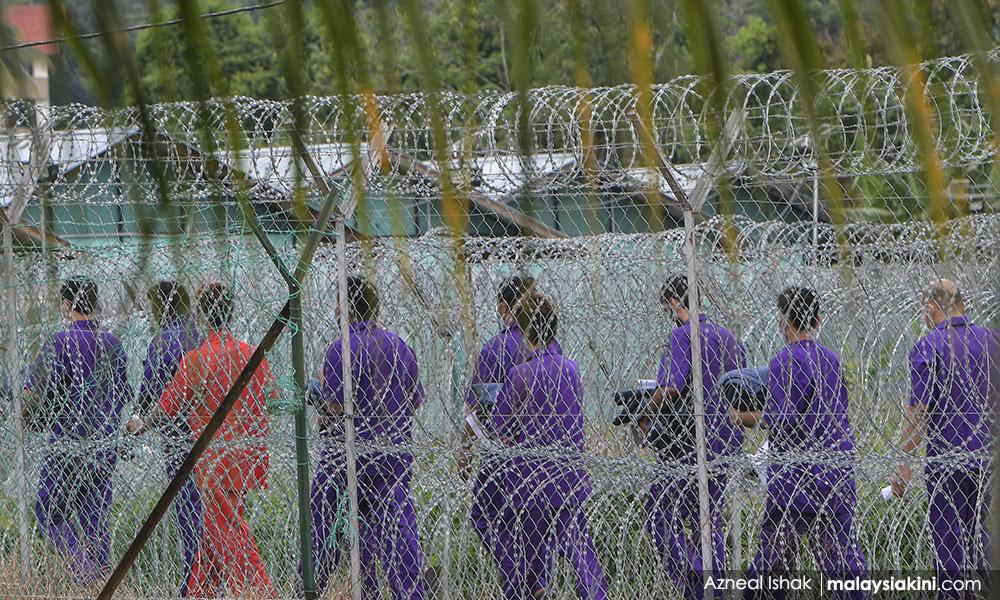
The Malaysians Against Death Penalty and Torture (Madpet) urges Malaysia to speedily amend the Immigration Act to recognise the RRD as a valid pass or proof of legal presence in Malaysia, for we certainly do not want any more asylum seekers and refugees to still be arrested, detained, or charged for illegally being in Malaysia.
Considering the process of registration may take time, Madpet also asks that those asylum seekers who are going to apply or have submitted their application for registration also be accorded protection too.
Noting that in six months, Malaysia has only managed to process and give RRDs to just 78 individuals, Madpet urges that the process be expedited in the interest of justice, noting there may be more than 200,000 asylum seekers and refugees in Malaysia.
Madpet calls upon Malaysia to enact a Refugee and Asylum Seeker law that will also provide legal recognition for the RRD programme.
Comply with non-refoulement principle
Saifuddin said the programme will ultimately lead to only three possible outcomes: repatriation, third-country resettlement, or deportation for legal offenders.
There are only three possible outcomes in managing refugees and asylum seekers.
“First, repatriation, which means sending them home once their country is safe and permits their return. Even if they are registered under the RRD, it does not mean they will remain here indefinitely.
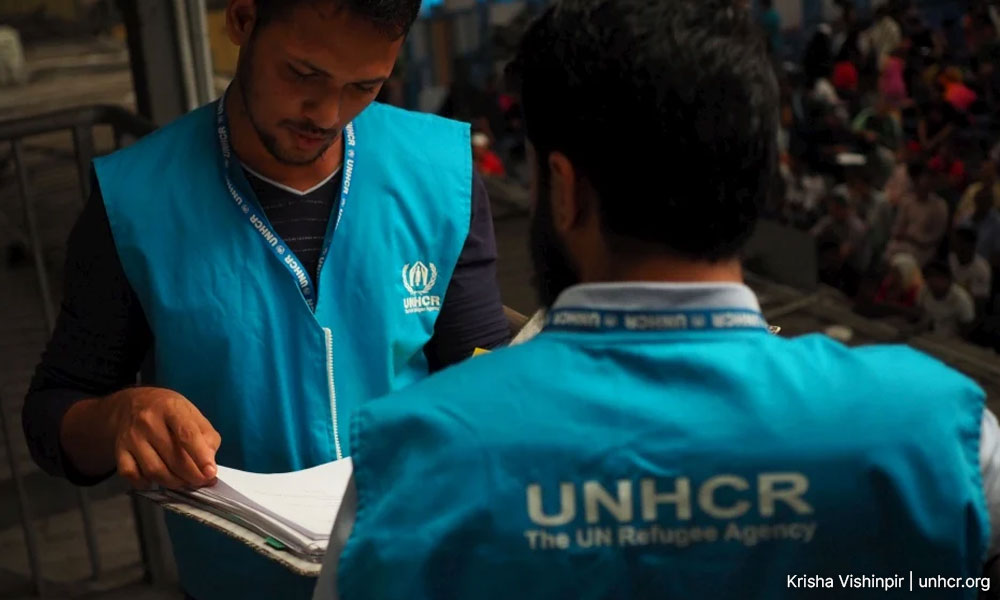
“Second, resettlement in a third country. International agencies such as the United Nations High Commissioner for Refugees (UNHCR) must continue fulfilling that role. The UNHCR exists to register refugees and secure third-country placements.
“Third, deportation for those who violate laws and regulations. If they commit crimes and all due legal processes, convictions, and appeals have been exhausted, they will be deported. (NST, May 18)
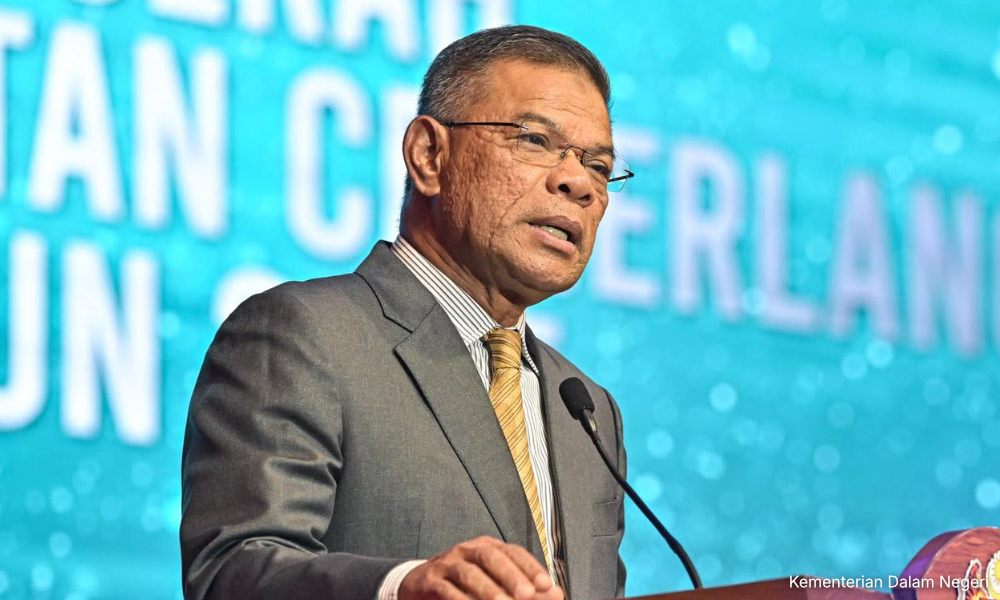
Madpet applauds Malaysia’s commitment to not send asylum seekers and refugees home until their country is safe and permits their return is consistent with the principle of non-refoulement.
The principle of non-refoulement forms an essential protection under international human rights, refugee, humanitarian, and customary law.
It prohibits states from transferring or removing individuals from their jurisdiction or effective control when there are substantial grounds for believing that the person would be at risk of irreparable harm upon return, including persecution, torture, ill-treatment, or other serious human rights violations.
Need income to survive
In the past, the UN, through the UNHCR, undertook to bear the cost of accommodation and upkeep of these asylum seekers and refugees until they are settled in a third country, but now that burden falls on the nation state accepting refugees, or directly on the asylum seekers and refugees themselves who are expected to find their own food or shelter.
Housing and feeding some 200,000-plus refugees and asylum seekers in special detention centres may be impossible at the moment, so it is best to consider employment for refugees so they can earn and fend for themselves while not living in places of detention.
Thus, it was good to note that Malaysia is considering this - “He (Saifuddin) added that the programme also explored the possibility of matching approved refugees and asylum seekers with employers facing labour shortages in sectors such as manufacturing, plantations, agriculture, and construction.” (NST, May 18
Madpet proposes that Malaysia prioritise using asylum seekers and refugees to overcome labour needs first before resorting to bringing in migrant workers from other countries. There are 2,132,578 active and legally employed migrant workers as of Oct 15, 2025. (NST, Nov 3, 2025)
School for refugee children
As of early 2026, there are approximately 215,600 registered refugees and asylum-seekers in Malaysia according to UNHCR, though women and children still account for more than half of the total population.
Roughly 28,600 children fall into the primary or secondary school-going age brackets. There may be even more, being those who have yet to be registered by UNHCR.
Madpet calls on Malaysia to allow all these asylum seeker and refugee children to continue their studies in Malaysian public schools or other schools as the government deems appropriate. A child’s future is at risk if he/she cannot receive or continue their education.
A refugee has been defined as someone who has fled their country of nationality and is unable or unwilling to return due to a well-founded fear of persecution based on race, religion, nationality, political opinion, or membership in a particular social group – but for Malaysians, they are just human beings who need our temporary assistance.
Their children should never lose out on the basic right to study in schools, more so since Malaysia has ratified the United Nations Convention on the Rights of the Child (UNCRC).
The speedy assessment and determination of asylum seeker or refugee status is crucial to prevent Malaysia from unknowingly further persecuting these persons, who have sought our temporary help.
Hence, the importance of providing legal protection for asylum seekers and refugees through laws – temporary policies not recognised in law will not do. - Mkini
CHARLES HECTOR is an activist with the Malaysians Against Death Penalty and Torture (Madpet).
The views expressed here are those of the author/contributor and do not necessarily represent the views of MMKtT.

No comments:
Post a Comment
Note: Only a member of this blog may post a comment.