


JOHOR POLLS | Research firm Ilham Centre has projected BN to secure a two-thirds majority in tomorrow's Johor election, citing the coalition's strong machinery, stable Malay support, and the popularity of caretaker menteri besar Onn Hafiz Ghazi.
Of the 56 state seats, the firm projected BN to lead in 39, Pakatan Harapan in nine, while the remaining eight - Tenang, Tangkak, Maharani, Layang-Layang, Puteri Wangsa, Johor Jaya, Kota Iskandar and Bukit Batu - are too close to call.
"BN's advantage stems from a combination of candidates who began working the ground early, a strong campaign machinery, stable support from its Malay core base, and Onn's cross-generational and cross-ethnic popularity.
"Conversely, the split in support within the opposition bloc, Perikatan Nasional's weakness as the main challenger, and Harapan's failure to establish a dominant campaign narrative have further strengthened BN's position," it said in a statement today.
The think tank also pointed to PAS' support for BN in Malay-majority constituencies as another factor working in the coalition's favour.
On Wednesday night, PAS president Abdul Hadi Awang said the Islamist party stands ready to back Umno in forming the Johor state government, highlighting the "political power" of Malays and Muslims, as well as "non-extreme" non-Malays.
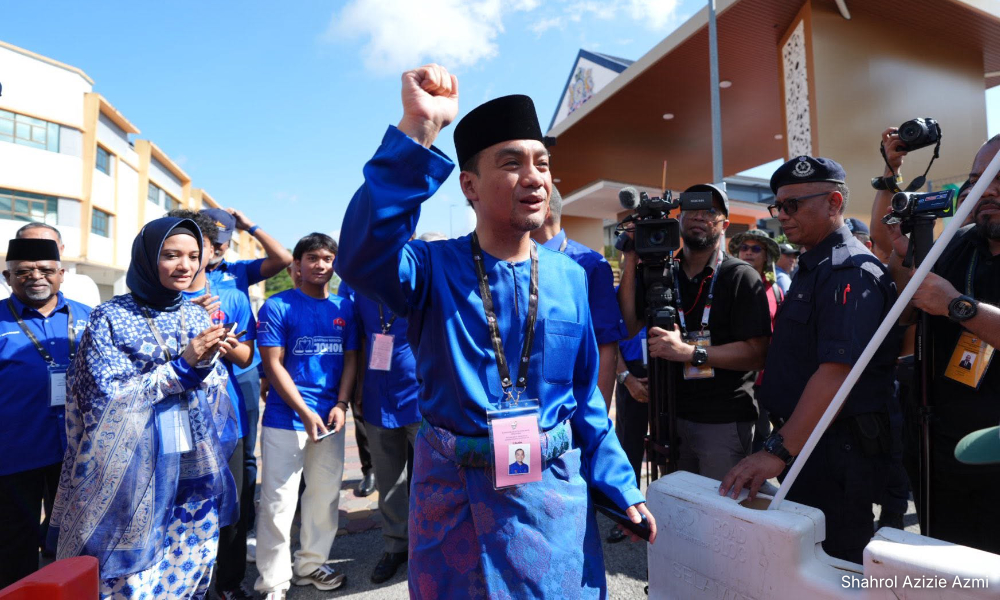
This was despite Onn guaranteeing that PAS will never be part of the Johor government if he is reappointed as menteri besar.
Overcoming apathy
On the other hand, Ilham Centre said Harapan faces the challenge of overcoming apathy among Chinese voters, whose disappointment with the coalition could suppress turnout.
It said Harapan may retain its urban and semi-urban seats should the voter turnout hit at least 65 percent tomorrow.
"If voter turnout falls below expectations, some seats that were previously considered comfortable could potentially turn into tight contests or fall to BN," it added.
The report also highlighted Onn's personal appeal, saying 79 percent of respondents viewed the Johor BN chairperson favourably, compared with 40 percent for Prime Minister Anwar Ibrahim.
While Onn and Anwar emerged as the central figures for their respective coalitions during the campaign, voters appeared more inclined to judge the election based on the state government's performance than federal issues.
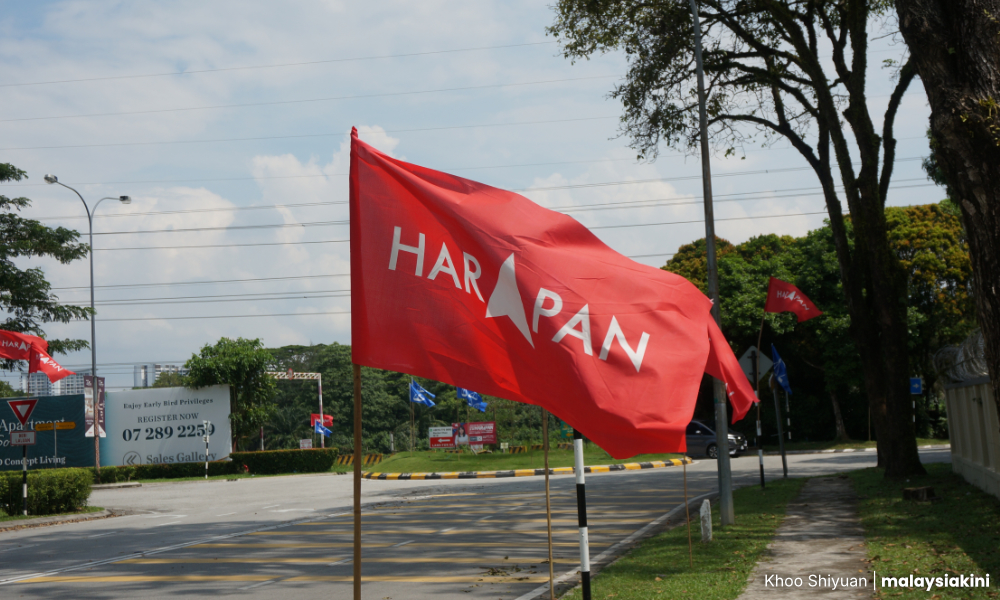
"On the other hand, Harapan was seen to be too dependent on the prime minister's influence to lift the momentum of the campaign.
"Although Anwar visited many areas and became the main face of the Harapan campaign, this approach did not successfully translate into the formation of a significant wave of support," it said.
Weakened PN
As for PN, the rift between PAS and Bersatu has led to a weakened position in facing the polls, as internal tension has eroded supporters' confidence in coalition unity.
The ongoing bouts of factionalism have also stalled PN's trajectory, which had improved significantly between GE15 and the 2022 Johor state election.
"The confusing political signals regarding the coalition's direction, coupled with the failure to present a clear leadership and strategy ahead of the election, have eroded PN's image as an alternative that is ready to take over the state administration.
"This situation has caused PN to enter the Johor election limping and without adequate preparation," Ilham Centre explained.
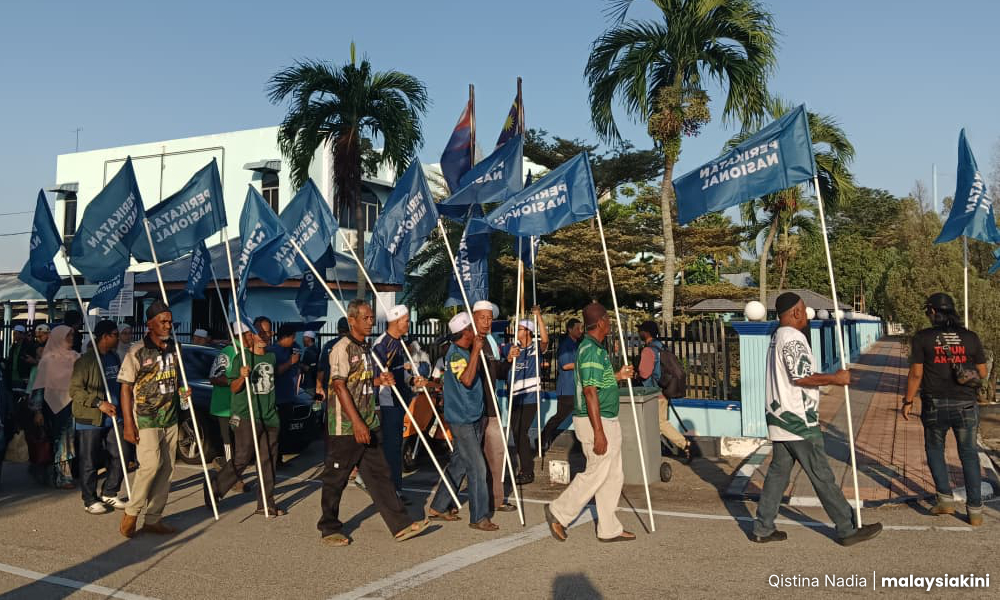
While Harapan is unlikely to mount a successful challenge to BN in Malay-majority areas, PN's internal issues may also prevent it from emerging as a threat.
Based on Ilham Centre's survey, PN supporters had expressed disappointment with the coalition's weak coordination, its poorly organised campaign, and the failure to produce a narrative to match BN's.
Unpredictable youths
Ilham Centre said youths remained hard to predict as their votes tended to favour candidates rather than parties, unlike previous generations.
They were also what the research firm described as "late deciders", as their votes are finalised only after the campaign period ends, following developments on social media and discussions with their peers.
"This pattern causes changes in support among young voters to occur quickly and is difficult to predict until polling day," it stated.
It found that youth voters prioritise candidates' service records and visibility, giving an edge to incumbents who are perceived as having performed well.
Additionally, smaller parties such as Parti Bersama Malaysia and Muda are still seen as "spoilers" that draw votes away from major parties rather than a viable option.
Muda's campaign was found to have depended too much on the popularity of its founder, Syed Saddiq Syed Abdul Rahman's, which failed to convert into widespread support.
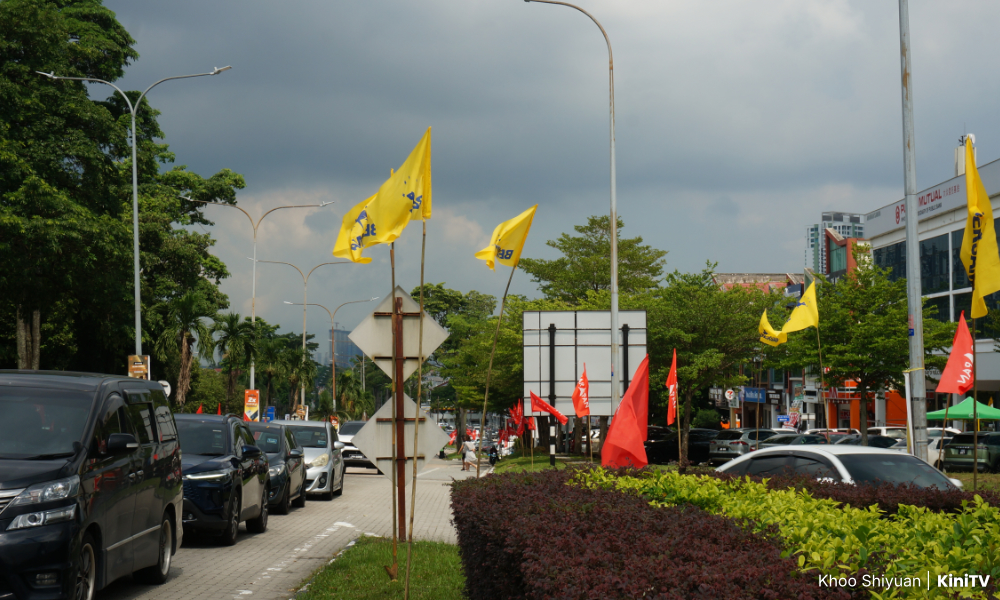
The same was found for Bersama, Ilham Centre said.
As for Muda, research findings indicate that the party's victory in Puteri Wangsa in the last state election was widely perceived to have stemmed from its alliance with Harapan rather than its own strength.
"In a situation where competition is increasingly focused on administrative service records, machinery strength, and candidate credibility, small parties have yet to convince voters that they have the capacity to be a realistic political alternative in Johor," it concluded.
The findings were based on Ilham Centre's statewide field study from June 26 to July 9 to assess voter sentiment and behaviour, as well as electoral trends ahead of the Johor state election.
The study combined face-to-face quantitative surveys with qualitative methods, including focus group discussions and in-depth interviews, along with the analysis of voting patterns from the 2022 Johor state election and GE15.
Researchers surveyed 1,250 respondents across all 56 state constituencies using stratified random sampling to ensure representation across ethnicity, gender, age, income, education, occupation, and locality. - Mkini

No comments:
Post a Comment
Note: Only a member of this blog may post a comment.