


With all the discussions that have been surrounding artificial intelligence (AI), you would think that the movie “Terminator” is coming true and that we’re about to be enslaved by a bunch of robots.
The whole narrative around AI has become quite exhausting. Everyone thinks AI is going to steal our jobs and turn our brains into dumb dumbs.
But let’s be real because the problem isn’t the machine; it is us.
The crisis we’re dealing with right now isn’t a tech crisis. We spend way too much time arguing about how AI is going to ruin humanity, but almost no time talking about the practical, everyday stuff that it can do.
We need to realise that AI is a tool. Just like television, the internet, search engines, and whatever else. It’s a mirror of human data, human inputs, and human intent.
Latest in long line of technological disruption
If we look back in history, every single major technological leap has triggered the exact same kind of panic.
When the printing press came out, critics were terrified it would destroy our memories because people wouldn’t have to memorise books anymore.
When electronic calculators entered classrooms, people argued that they would rot kids’ brains and kill our ability for mathematics.

The truth is, we as human beings have survived it all. We adapted, not by banning the tech, but by mastering it.
The conversation needs to grow up. Instead of asking how we run away from this, we should be asking how we use this to make things better.
We need to talk about how AI can actually boost human capability.
If a film is bad because it is poorly framed, shaky, and nonsensical, you don’t blame the camera. You look at the director behind the lens.
The tool doesn’t have a brain or any bad intentions. The responsibility remains with humans because we are the ones using and prompting it.
Having it backwards
The place where this is most damaging is in our educational institutions, like schools and universities.
If you walk into almost any campus today, the response to tools like ChatGPT is almost always punitive.
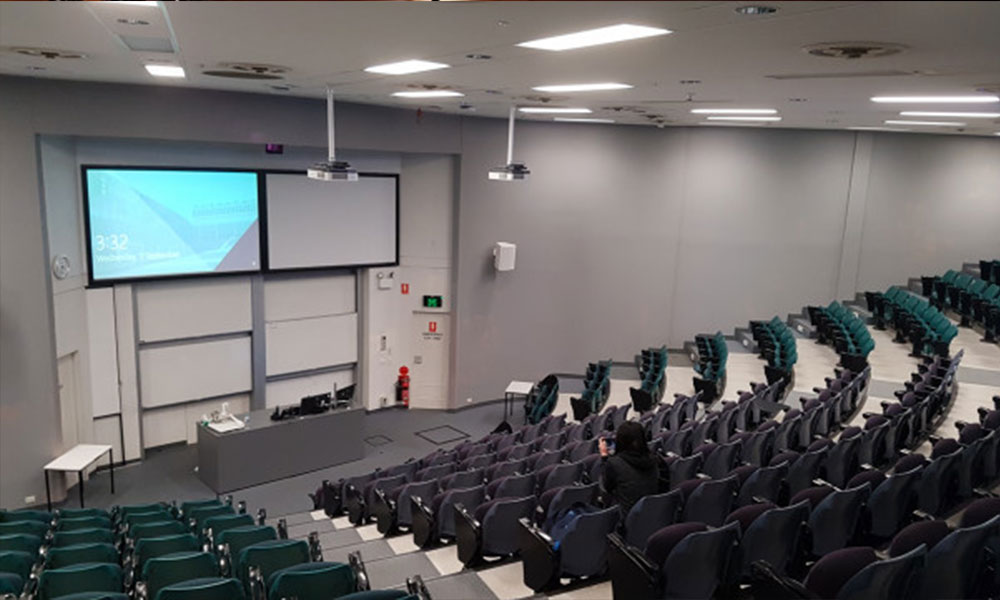
Lecturers are hyper-focused on catching AI plagiarism, building digital firewalls, and treating the technology like some taboo cheat code that students are going to use to get out of doing work.
This is the wrong approach because by demonising AI in the classroom, educators aren’t actually stopping students from using it.
Come on, we know how students are (because we’ve all been there!) and they’re just going to drive it underground. It just ensures that they use it secretly and poorly.
There is also the fact that most industries are already using AI in their workflow.
So, these educational institutions are releasing a generation of young people into a job market that expects them to know how to use these digital tools when they treat them like illegal contraband in prison.

Instead of fighting a losing battle against the future, schools and universities need to bring AI to the forefront.
We should be integrating proper AI usage straight into the syllabus. Teach students how to co-author with an algorithm, how to use it for brainstorming, and how to spot its inherent biases.
Healthy scepticism
True digital literacy means understanding the boundaries of integrity while maximising the tech.
We shouldn’t be teaching students to avoid the tool. Instead, we should be teaching them to master it so thoroughly that they remain the irreplaceable creator of their own work.
With that being said, all the education and awareness in the world won’t mean a thing if the rest of society remains passive consumers of information and content.
The public themselves need to be aware of the rise of deepfakes and hyper-targeted algorithms. As consumers, they need to practice lateral consumption.
We have become so lazy as consumers because we live in comfortable, algorithm-based echo chambers that feed us exactly what we want.

AI doesn’t even really need to make much of an effort. It just needs to tell us what we already want to believe, and we will take it from there.
We accept any manipulated videos or fabricated quotes as long as it validates our preexisting biases.
We see a headline that makes us angry at a politician we already dislike, and we share it immediately. There is no fact-checking, no doubts, or second thoughts.
In a time when anything can be faked, the burden of verification is ours alone. We need to cultivate a culture of healthy scepticism.
We need to start actively questioning sources. We need to develop the habitual discipline of pausing and questioning everything and comparing everything. That is lateral consumption.
If we give up our scepticism, we give up our ability to think for ourselves.
AI is here to stay. We can either choose to hate AI and keep calling for its demise, or we can choose to be realistic and look at AI not as a replacement for human thought, but as a catalyst for it.
The choice belongs to the driver, not the machine. - Mkini
ZAN AZLEE is a writer, documentary filmmaker, journalist and academic. Visit fatbidin.com to view his work.
The views expressed here are those of the author/contributor and do not necessarily represent the views of MMKtT.

No comments:
Post a Comment
Note: Only a member of this blog may post a comment.