


Former deputy inspector-general of police Ayob Khan Mydin Pitchay maintained his support for the Security Offences (Special Measures) Act 2012 (Sosma).
He emphasised that ordinary legal frameworks are insufficient, making specialised statutory tools necessary to address terrorism and criminal syndicates.
A few people have whispered to me that Ayob is highly religious, suggesting his stance may be influenced by his faith.
With due respect, it is rather weird that his strong religious belief has led him to defend the obnoxious Sosma.
Indeed, religious teachings - particularly in Islam - strongly oppose all forms of oppression, including draconian legislation like the Internal Security Act and Sosma.

Given that Islamic tenets place a heavy emphasis on justice and explicitly condemn tyrannical practices, defending heavily criticised security laws like Sosma appears inconsistent with those core spiritual values.
Constitutional rights ignored
His recent media statement defending Sosma suggests a total disregard for the unjust and draconian elements embedded in the legislation, presenting these controversial measures as entirely acceptable.
I am not sure whether Ayob is fully aware that this draconian law effectively abolishes the standard requirement for judicial remand when law enforcement seeks to extend a suspect’s detention beyond the initial 24 hours - a fundamental safeguard enshrined in the Constitution.
By introducing provisions that directly conflict with both the Criminal Procedure Code (CPC) and the Federal Constitution, Sosma functions in a manner that overrides Malaysia’s supreme law.
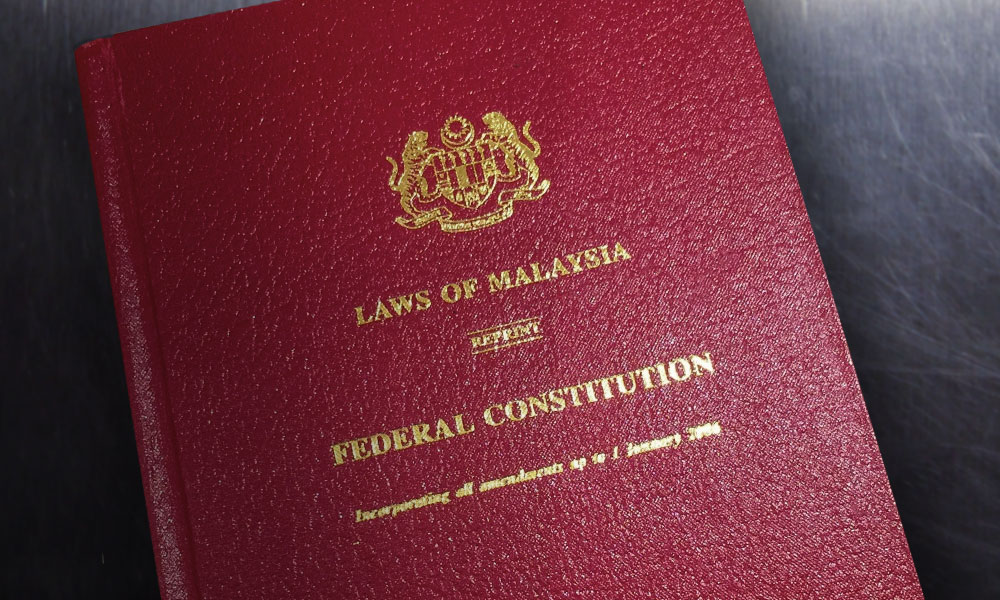
In other words, Sosma absolutely undermines the Federal Constitution, effectively positioning the Act above the nation’s supreme law. Thus, the sovereignty of the apex law held no weight for Ayob.
But Ayob seems to forget that this law is not only opposed because it gives the police the power to extend a suspect’s detention beyond 24 hours without any court order, but it also contains a plethora of oppressive elements, especially Section 30.
Under Section 30 of the Act, judges are essentially stripped of their discretion, effectively giving the prosecution free rein to demand that the court bend to its will.
Imbalance of power
Anyway, I can easily understand why Ayob strongly defends Sosma. It is simply because the law is police- and prosecution-friendly legislation through and through.
Opposing Sosma has nothing to do with the endorsement of any serious and heinous crimes, including terrorism; far from it.
Unlike civil law, which generally operates between equal private parties, criminal law is structurally built upon an imbalance of power, with the state holding a dominant position from the outset.
Exceptional legislation like Sosma further expands this state authority, consequently eroding several inherent rights and due process guarantees traditionally afforded to the accused.
Many experts have argued that Parliament must add a few moral colours to Sosma, or it is hoped that the courts will, when the opportunity arrives, give it a constitutional dressing-down. - Mkini
MOHAMED HANIPA MAIDIN is a former deputy minister of law.
The views expressed here are those of the author/contributor and do not necessarily represent the views of MMKtT.

No comments:
Post a Comment
Note: Only a member of this blog may post a comment.