


An environmental NGO has called on the Pahang state government and Putrajaya to disclose all relevant information connected to Orang Asli land disputes as well as a timeline for the resolution of each case.
According to Organisation for the Preservation of National Heritage Malaysia (Peka) president Rajesh Nagarajan, Pahang ruler Sultan Abdullah Ahmad Shah's call to speed up surveying, demarcation, and gazettement of Orang Asli land was justified, questioning why their land rights remain unresolved.
He stressed that the Orang Asli communities were not responsible for carrying out such activities, as it falls under government purview.
"That is not an Orang Asli failure. It is an administrative failure which the Pahang state government and the federal government through the Department of Orang Asli Development (Jakoa) must explain," Rajesh (above) said in a statement today.
Recently, Sultan Abdullah urged against the arbitrary use of the term "customary land" (tanah adat) as the Aboriginal Peoples Act 1954 did not provide for such a category of land in Peninsular Malaysia.
This occurred after a displaced Orang Asli villager from Kampung Sungai Cot, Juliana Jazlin Ismail, respectfully declined Tengku Ampuan Pahang Tunku Azizah Aminah Maimunah Iskandariah's offer of temporary resettlement.
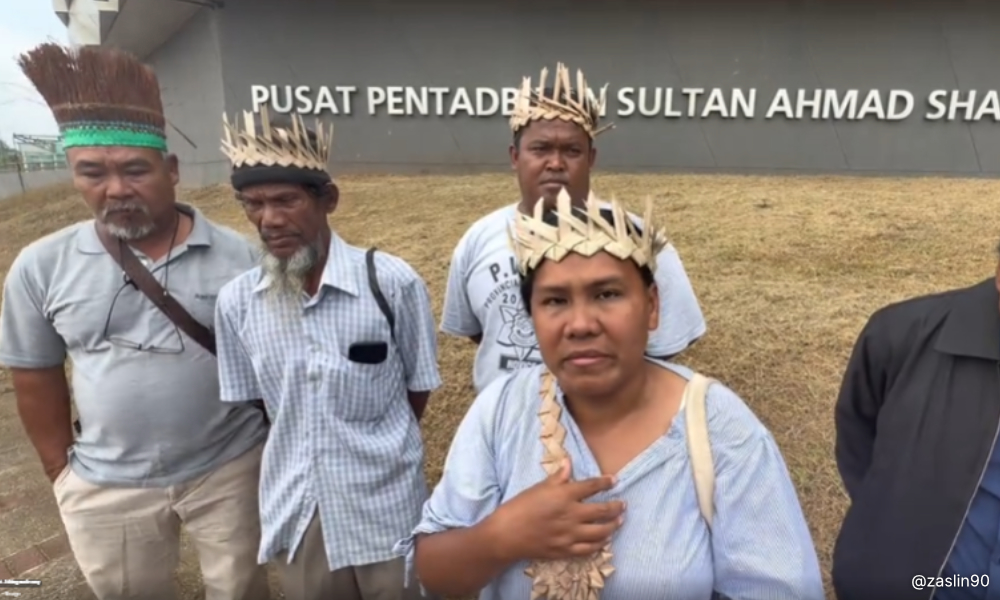
At the time, Peka had responded to the invitation by highlighting that it was not a permanent solution to land issues while also reinforcing the removal of Orang Asli from their land.
Kampung Sungai Cot villagers had been reportedly embroiled in the land dispute since 2015, when villagers claimed that the Pahang government sold their ancestral land to a developer.
Census, mapping exercise
Commenting further, Rajesh called for a comprehensive ground census and mapping exercise involving tok batin (village heads), Orang Asli organisations, community representatives, and civil society groups to identify all settlements.
He said 218 out of 264 registered Orang Asli villages in Pahang had not completed gazettement or received land titles, citing data from the state government.
Rajesh added that the figure of 264 villages itself might not represent the total number of Orang Asli settlements in the state.
He cited Kampung Selimbar and Kampung Sungai Cot as unregistered Orang Asli settlements not listed with Jakoa, with the latter being described as a "fragmented village" (kampung serpihan).
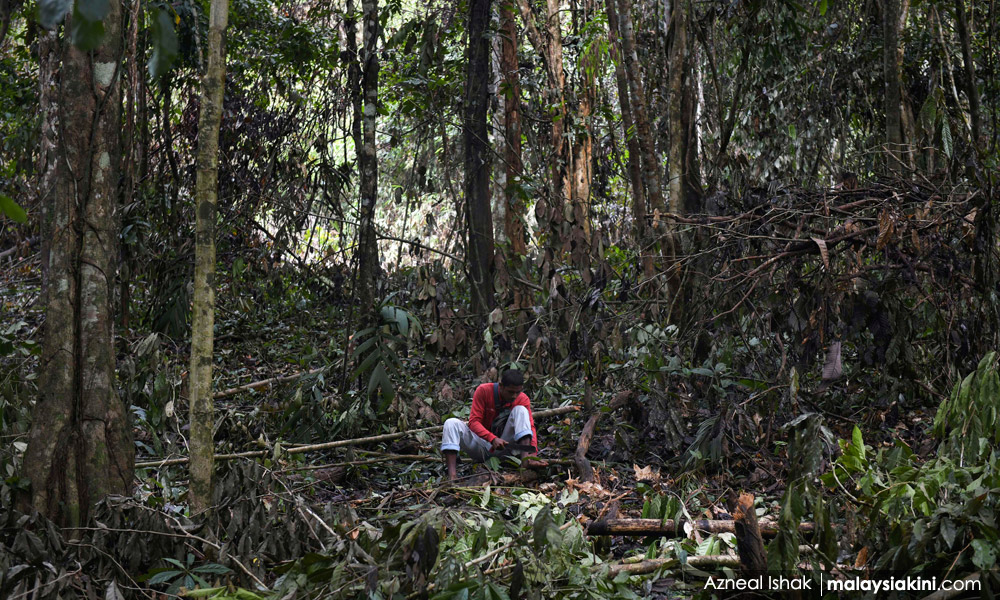
He also said the Pahang government needed to explain why it had not fully implemented a 2017 decision to gazette 217 Orang Asli villages - 76 as reserves and 141 as aboriginal areas.
"Yet, almost nine years later, only 30 have been gazetted.
"At least 187 villages remain ungazetted today, not because the state has yet to decide, but because the Pahang state government has failed to give effect to its own decision," Rajesh claimed.
Putrajaya, state govt must buck up
Additionally, he said the federal government and Jakoa could not simply argue that land matters fell under state jurisdiction.
He referred to Section 4 of the Aboriginal Peoples Act, which places responsibility for the general administration, welfare, and advancement of Orang Asli with the Jakoa director-general.
“The state cannot say, ‘Jakoa has not completed the process.’ Jakoa cannot say, ‘Land is a state matter.’
“While responsibility is passed between governments, the Orang Asli continue to wait,” he lamented.
Rajesh explained that while not every piece of land occupied or used by an Orang Asli community automatically constituted customary land, customary rights did not arise only after land was gazetted under Sections 6 or 7 of the Aboriginal Peoples Act.
He said Section 2 of the Act itself recognised an “aboriginal inhabited place” as an area inhabited by an Orang Asli community that had not been declared an aboriginal area or reserve.

He also cited the 2005 Sagong Tasi ruling, where the Court of Appeal affirmed that state ownership alone does not override Orang Asli customary land claims.
The court also held that the Aboriginal Peoples Act should be interpreted as a human rights law in favour of Orang Asli, and rejected the view that lack of formal land alienation negates their land interest, he added.
Rajesh noted that the decision further recognised a fiduciary duty on authorities to protect Orang Asli rights, adding that failure to gazette land could breach this duty if communities are known to be settled there and left unprotected.
“The principle is compelling: the government cannot delay gazettement for years and then rely upon the absence of that very gazette to deny Orang Asli customary rights,” he said. - Mkini

No comments:
Post a Comment
Note: Only a member of this blog may post a comment.