


Prime Minister Anwar Ibrahim has found himself in the middle of the continued geopolitical dispute between China and Taiwan.
In an interview with Al Jazeera, Anwar voiced support for the One China policy, as well as China’s right to use force in order to reunify the country, triggering backlash from Taiwan.
When asked about his views on Taiwanese people’s reluctance to accept Chinese rule, Anwar said that historical reasons must be considered, and that Taiwan is indeed part of China, so the decision should be left to the Chinese.
“I see Taiwan as part of China period. We may disagree with... There are some excesses. Yes, express your view. But it must be in that context. It is one China. It’s accepted by all,” he said in the interview aired on Monday.
When asked by the host if he wouldn’t empathise with Taiwanese people who reject authoritarian rule, Anwar said he has empathy for many issues, but the issue involves condoning the division of a legitimate independent country.
The host then asked whether Anwar would condemn China’s statement that it reserves the right to use force if reunification cannot be achieved peacefully, and when that day comes.
Anwar responded by citing Malaysia as an example, saying that if a state decides to separate, he would also try to stop it.
“If one province decides to break away, do we use force? I think I will protect the sanctity and unity of the nation,” he said.
When pressed by the host whether this meant he would use force if there were a secession, he replied: “Yes. Otherwise, (the country) will be fragmented.”
However, Anwar countered by asking why people always talk about and focus on the situation in China, but rarely discuss the internal issues of many European countries, the United States, or Africa.
Taiwan condemns Anwar
In response to the prime minister’s remarks, Taiwan’s Foreign Affairs Ministry issued a statement yesterday strongly condemning and refuting Anwar’s remarks as denigrating Taiwan’s sovereignty.
It accused Anwar of making “false” remarks by “absurdly implying that our country is a separatist province of China and publicly rationalising China’s stance on unifying Taiwan by force”.
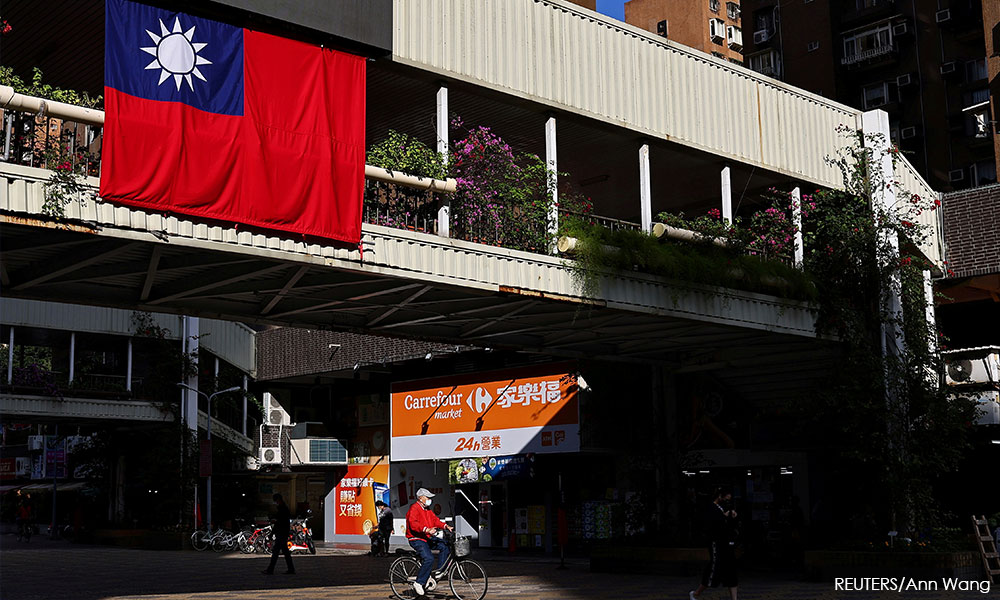
It reiterated that Taiwan is a sovereign and independent country, and is not subordinate to China, and accused Anwar of jeopardising peace in the region.
Further, it said that it also undermined the confidence of Taiwanese businesses investing in Malaysia.
The Taiwanese Foreign Affairs Ministry said that Anwar, as a self-proclaimed human rights defender, should also “value universal principles such as democracy, freedom, human rights, and the rule of law, as well as respect and safeguard the will of the people.”
Taiwan was Malaysia’s fourth-largest trading partner last year, after mainland China, Singapore, and the US; trading primarily in electrical and electronic goods.
Figures from Malaysia’s Statistics Department showed Malaysia imported RM145 billion worth of goods from Taiwan and exported RM88 billion to the island, amounting to 7.61 percent of Malaysia’s external trade.
The figure only covers trade in goods, not services.
Engagement continues
Besides commenting on Taiwan’s sovereignty, Anwar, during the Al Jazeera interview, also criticised the so-called “China threat theory”, saying it stems from Western fears about China’s influence over the South China Sea
“I say from my experience not only in Malaysia but also in Asean, the engagement continues. In fact, we have called for the inclusion of the code of conduct which was not initially agreed upon, but now the Chinese have considered it,” the prime minister said.
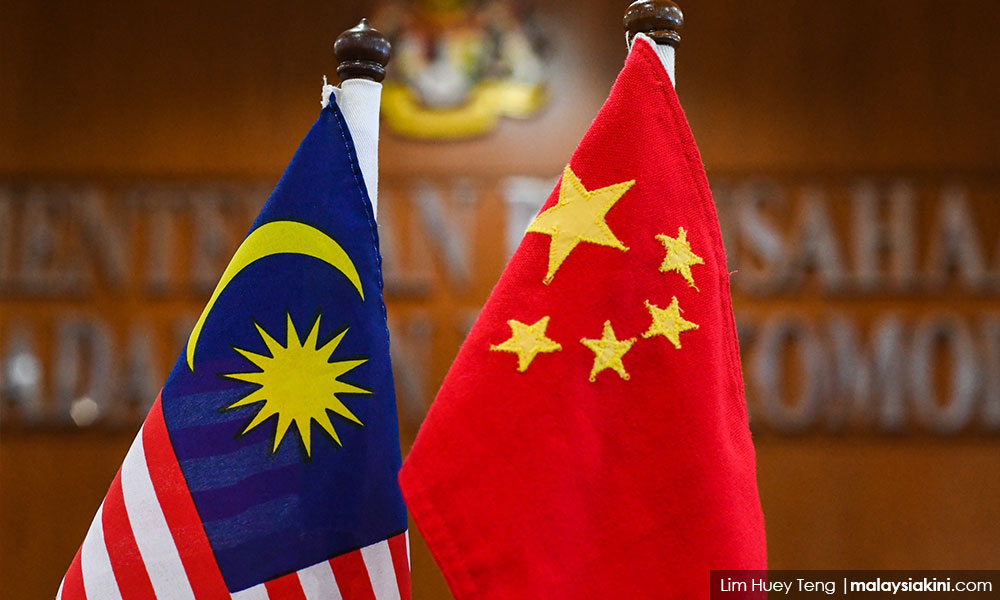
In response to the Malaysian foreign minister’s description of China as posing a serious threat to Malaysia’s sovereignty after Chinese warplanes and ships entered Malaysian territory, Anwar explained that China would cease its actions when Malaysia raised objections or protests.
Anwar also denied that he was softening his stance towards China because Malaysia and China are important trading partners, but rather that he maintained the same moderate attitude towards all neighbouring countries.
“I am soft with all my neighbours, with China, with the US,” he said, adding that when issues arise, views will be aired either publicly or privately. - Mkini

No comments:
Post a Comment
Note: Only a member of this blog may post a comment.