


The era of defining Gulf security without Iran is over. Military power alone cannot erase Iran's geography, political will, and deterrent capacity.
From Abdolreza Alami
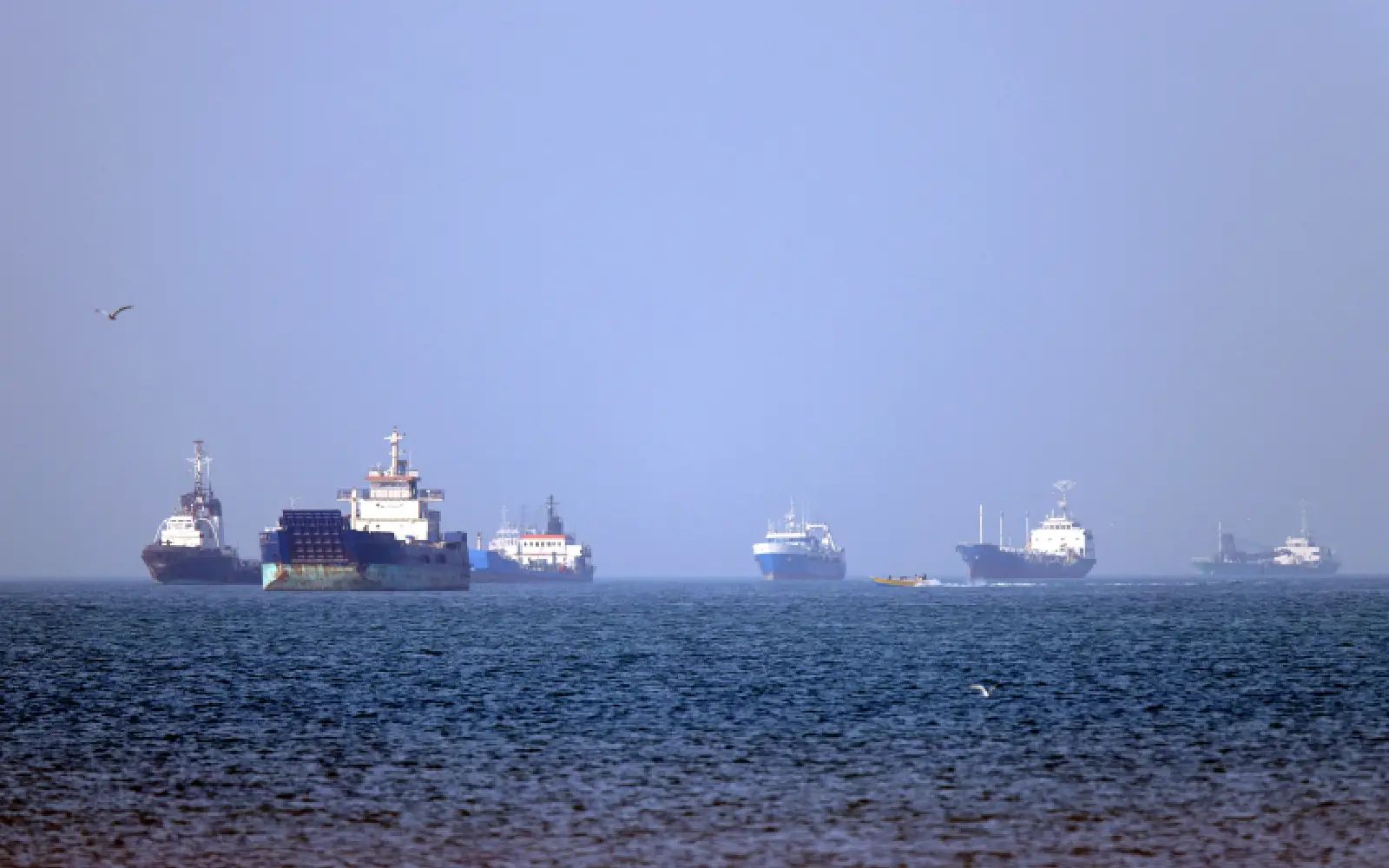
The renewed standoff between Iran and the US in the Strait of Hormuz is no technical disagreement over maritime transit. It is a struggle over the future security order of the Persian Gulf.
Recent developments underscore how fragile the interim understanding between Tehran and Washington was from the start. Iran agreed to allow ships to transit without fees for 60 days, but viewed it as its right to regulate routes and manage maritime traffic. The US demanded a full return to the pre-war status quo – casting itself as the guarantor of freedom of navigation while denying a comparable role to one of the strait’s two littoral states.
The dispute is not merely legal or maritime. From Iran’s perspective, Hormuz has become a symbol of a shifted balance of power. The US and Israel entered the confrontation believing that airstrikes, economic pressure, and threats of regime change could force Tehran into capitulation.
The outcome defied expectations: Iran preserved its political structure and showed it could carry the costs of war beyond its borders – affecting energy flows, maritime trade, and the security of US bases – upending the assumption that a limited, low-cost war could be imposed on it.
The freedom-of-navigation paradox
The US’s decision to reinstate the naval blockade of Iranian ports, while threatening strikes on power plants, bridges and other infrastructure, laid bare a familiar logic: when Washington cannot secure its maximalist demands through negotiation, it reverts to force and economic punishment. It invokes “freedom of navigation” while blockading a sovereign state’s ports and striking it to compel acceptance of political terms. On July 15, Washington resumed the blockade and widened its attacks inside Iran.
Even US president Donald Trump’s short-lived proposal to charge a 20% fee on vessels transiting under its military protection exposed the double standard. Washington calls any potential Iranian levy a threat to freedom of navigation; when it floats a fee of its own, it is the price of “protection”. Trump withdrew the idea after Gulf Arab objections.
The core dispute, then, is about who has the right to exercise power in Hormuz. Washington wants an order in which the US Navy defines security thousands of kilometres from its own shores, while Iran merely implements American decisions.
From Tehran’s vantage point, that is not freedom of navigation; it is the entrenchment of a foreign power’s military supremacy.
Israel’s role in widening the crisis
Israel has played a central part in generating and escalating this crisis. For years, Tel Aviv has worked to recast Iran’s nuclear programme, missile capabilities, and regional influence as an immediate, existential threat. The real aim, however is the structural weakening of Iran, the most significant power opposing Israeli primacy in the region.
The US’s direct entry into the war showed how successfully Tel Aviv redefined its own security interests as those of the US and the entire region. But Iran was not the only party to pay. Gulf Arab states, which for decades tied their security to the US military umbrella, discovered that hosting US bases could make them part of the battlefield: security outsourced to a foreign power became, in crisis, a strategic vulnerability.
Oman’s foreign minister, Badr Albusaidi, has said as much: Arab states that relied on US security cooperation now experience it as a serious vulnerability, and America’s entry into the war was among Washington’s gravest miscalculations.
Containment has failed
Albusaidi also describes the war as unnecessary and catastrophic, stressing that Omanis and their Gulf neighbours continue to bear the consequences of a crisis that failed even to achieve its declared aims.
More significantly, he directly challenges the policy of containing Iran on the assumption it poses an existential threat and that security requires isolation, sanctions, blockade, and an expanding US footprint.
The war, he argues, revealed containment to be less a functioning security structure than a political myth; the gravest threats to Gulf security originate not necessarily within the region, but from decisions taken outside it, above all in Tel Aviv .
These are the words of a GCC member that has kept historic ties with Iran while repeatedly mediating between Tehran and Washington; they cannot be dismissed as partisanship. They state a geopolitical fact: security in Hormuz is impossible without Iran. Iranian and Omani territorial waters form the strait, and Albusaidi has stressed Muscat’s special responsibility to work with Iran and the international community on maritime transit.
Four decades of containment assumed that more pressure, isolation, arms sales, and US presence would leave Iran weaker and the region safer. The record shows the opposite: the Persian Gulf has become one of the most militarised and fragile regions on earth.
Iran and the logic of mutual deterrence
The crisis also exposes how selectively “freedom of navigation” is deployed. Transit freedom matters to Washington when it serves its interests; Iran’s sovereignty, coastal security and concerns over massed foreign warships rarely figure. Tehran argues it cannot be expected to guarantee, unconditionally, the energy flows of its rivals while its own ports, infrastructure and cities face blockade or attack.
This is not to ignore the dangers of attacks on merchant shipping: harm to commercial vessels would erode the legitimacy of Iran’s stance and turn Asian states, the biggest consumers of Gulf energy, against Tehran. Reducing the crisis to “an Iranian threat to global shipping” distorts cause and effect.
Neither war nor deal
The most probable scenario ahead is neither all-out war nor a durable agreement. Iran wants its wartime gains – above all its role in managing Hormuz – recognised in post-war arrangements; the US seeks to restore the status quo ante while extracting further nuclear concessions. This “no war, no deal” condition is dangerously brittle; without trust or a dispute-resolution mechanism, any incident at sea can spark escalation.
For Malaysia and other Asian nations, Hormuz is not distant. Before the war, roughly a fifth of the world’s traded oil and liquefied natural gas passed through the strait, and reduced shipping has already raised energy, insurance and freight costs. Asian states should be wary of narratives that place the entire burden of the crisis on Iran.
The message is clear: the era of defining Gulf security without Iran is over. Military power alone cannot erase Iran’s geography, political will and deterrent capacity, and Israel cannot manage the costs of a prolonged war for regional states or the global economy.
What is playing out in Hormuz is a contest between two visions of order – one built on containment, American primacy, and Israeli impunity, the other treating Iran as an unavoidable power in the Gulf equation.
Recent events show the first can no longer deliver lasting stability. - FMT
Abdolreza Alami is a geopolitical strategist, a senior lecturer, a researcher and an FMT reader.
The views expressed are those of the writer and do not necessarily reflect those of MMKtT.

No comments:
Post a Comment
Note: Only a member of this blog may post a comment.