


The political significance of the Negeri Sembilan state election extends well beyond the boundaries of one state.
Coming shortly after Johor, it has become a test not merely of electoral popularity but of whether Malaysia is once again entering an era of political realignment reminiscent of the events that culminated in the Sheraton Move of February 2020.
The original Sheraton Move remains one of the most consequential episodes in Malaysia’s democratic history.
It brought down the Pakatan Harapan government before it had completed its mandate, replacing it through parliamentary defections and coalition realignments rather than a general election.
The political consequences were profound. Malaysia experienced a succession of prime ministers within a short period, policy uncertainty increased, and investors questioned the country’s political stability.
Only in November 2022 did Datuk Seri Anwar Ibrahim finally assume office after years of political turbulence.
Regardless of whether one agrees with every aspect of his administration, the Unity Government represented an attempt to restore political continuity after prolonged instability.
Against this backdrop, Johor and Negeri Sembilan inevitably acquire national significance.
Whether it is entirely accurate to describe these elections as a “Double Sheraton” is open to debate. State elections are constitutionally distinct from parliamentary manoeuvres.
Voters have every democratic right to reward or punish governments through the ballot box. Yet politics is not judged solely by constitutional procedures.
It is also judged by political momentum, symbolism and the narratives that emerge after elections.
Should Johor and Negeri Sembilan together produce a powerful narrative that the Unity Government has irreversibly lost public confidence, pressure would inevitably build for further political repositioning at the federal level. Malaysian politics has repeatedly shown that perception often moves faster than constitutional reality.
This is precisely why Negeri Sembilan carries weight beyond its legislative seats.
Its own historical traditions make the election especially symbolic.
Negeri Sembilan has long cultivated a reputation for moderation, constitutionalism and institutional respect. Its ruler, Tuanku Muhriz, has consistently projected the importance of integrity in public life.
His earlier decision to revoke Najib Razak’s state honour following the latter’s conviction was widely interpreted as reinforcing the principle that no individual stands above the law. Public speeches emphasising integrity and constitutional responsibility likewise underscored that institutions matter as much as personalities.
That institutional message remains relevant today.
The election therefore raises a broader question: should Malaysians primarily evaluate governments through immediate political frustrations, or should they also consider the long-term consequences of repeated political instability?
Every democracy permits protest votes. Dissatisfaction with inflation, governance, communication failures or unmet expectations is entirely legitimate.
Yet democratic accountability also requires voters to distinguish between changing a state government and unintentionally contributing to prolonged national uncertainty.
The political landscape has become more complicated because PAS President Abdul Hadi Awang has publicly suggested that PAS played an important role in helping Barisan Nasional candidates, including MCA and MIC, during the Johor election.
Those remarks have inevitably fuelled speculation regarding possible tactical cooperation between parties that have historically competed fiercely against one another.
Whether such cooperation represents isolated local arrangements, informal understandings or merely overlapping electoral interests remains a matter of political interpretation. It should not be presented as an established nationwide alliance without firm evidence.
Nevertheless, the perception itself has become politically consequential because it raises questions about future coalition configurations should electoral circumstances continue to evolve.
This perception matters because PAS today differs significantly from the party under the late Nik Abdul Aziz Nik Mat.
Nik Aziz was widely respected across ethnic and political boundaries for his personal humility and willingness to engage with diverse partners despite ideological differences.
Hadi Awang’s leadership has often generated sharper political polarisation, with critics arguing that his approach places greater emphasis on ideological confrontation than broad national consensus.
Supporters naturally disagree with that characterisation, but the distinction between different periods of PAS leadership is undeniable in Malaysia’s political evolution.
For voters in Negeri Sembilan, therefore, the question extends beyond which coalition governs Seremban.
It concerns what political momentum their decision might generate nationally.
If Barisan Nasional continues expanding electorally while PAS simultaneously claims strategic credit for those victories, Malaysia could enter another prolonged period of coalition bargaining, leadership speculation and political uncertainty.
Such uncertainty does not automatically produce constitutional crises, but it can affect investor confidence, bureaucratic continuity and long-term policy implementation.
Malaysia has only recently begun restoring stronger economic momentum.
Growth has recovered compared with the immediate post-pandemic years. Foreign direct investment commitments have improved across advanced manufacturing, digital technologies and renewable energy.
Malaysia has also sought to position itself as an increasingly attractive destination for artificial intelligence infrastructure, semiconductor expansion and regional supply-chain diversification.
Currency performance has likewise reflected improved market confidence relative to earlier periods of political instability, although exchange rates continue to depend on numerous international factors including United States monetary policy, global commodity prices and regional capital flows.
None of these achievements should be viewed as belonging exclusively to one political leader.
Rather, they reflect the combined efforts of public institutions, civil servants, private investors, state governments and successive policy initiatives accumulated over many years.
That is precisely why political stability matters.
Frequent speculation over changing governments inevitably diverts attention from economic reforms towards political survival. Ministers become preoccupied with coalition arithmetic instead of implementation.
Civil servants hesitate over long-term decisions. Investors postpone commitments until political uncertainties become clearer.
Malaysia has experienced this cycle repeatedly over the last decade.
The challenge for Negeri Sembilan voters is therefore unusually difficult.
On one hand, they possess every democratic right to express dissatisfaction with any government.
On the other hand, they also carry responsibility for considering how their collective decision may influence national political dynamics beyond state boundaries.
This is not an argument against democratic competition. Healthy democracies require competitive elections.
Rather, it is an argument for balancing immediate political frustrations against longer-term institutional stability.
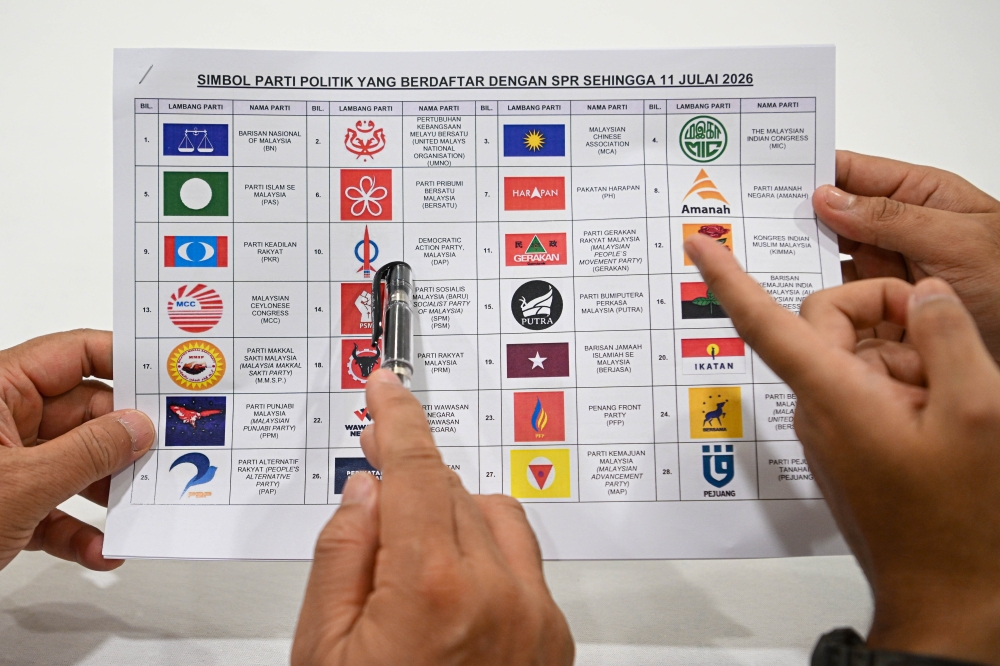
The coming election should therefore not become merely another contest between competing party logos or campaign slogans.
It should also become a reflection on what kind of political system Malaysians wish to strengthen as the Federation approaches its seventieth anniversary in 2027.
Malaysia deserves vigorous competition.
It also deserves governments capable of completing their mandates without constant speculation over political realignments.
Whether Johor and Negeri Sembilan ultimately become remembered as a “Double Sheraton” will depend less on election-night headlines than on what follows afterwards.
If the outcome simply reflects ordinary democratic alternation, Malaysia’s institutions will continue functioning normally.
If, however, the results trigger renewed attempts at federal political destabilisation, then historians may indeed regard these elections as marking another turning point.
The responsibility therefore rests not only with political parties but also with voters themselves.
Ultimately, elections should strengthen democratic legitimacy rather than merely reshuffle political power.
As Malaysia prepares to celebrate seventy years of nationhood in 2027, preserving constitutional stability while maintaining genuine electoral competition may prove to be the country’s greatest democratic achievement. - malaymail
* Phar Kim Beng is a professor of Asean Studies and director, Institute of Internationalisation and Asean Studies, International Islamic University of Malaysia.
** This is the personal opinion of the writer or publication and does not necessarily represent the views of MMKtT.

No comments:
Post a Comment
Note: Only a member of this blog may post a comment.