


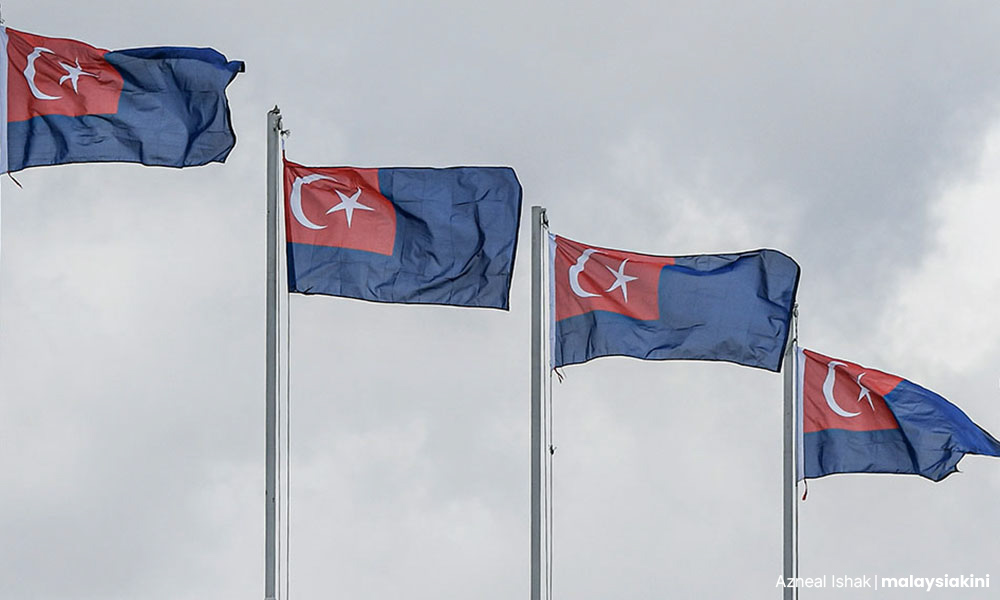
BN won 48 of Johor’s 56 state seats on July 11, its strongest result since 2008. Pakatan Harapan was reduced to eight seats, while Perikatan Nasional lost every seat it previously held.
Most commentaries have treated the result primarily as a question of electoral momentum: whether Johor foreshadows the Negeri Sembilan polls on Aug 1, whether BN is recovering nationally, and whether the outcome will accelerate calculations over the timing of Malaysia’s 16th general election.
These are important questions, but they do not fully explain what the election reveals about Malaysian politics.
Elections do more than distribute seats. They also expose the deeper rules by which political power is claimed, transferred, and defended.
Johor offers the latest example of a much older political logic, one also visible in the Negeri Sembilan succession crisis and the collapse of PN’s internal alliance.
Political struggles are often less about policy, ideology, or competing visions of government than about who is entitled to control a coalition, inherit a vote bank, command an institution, or claim the loyalty of a political community.
The language used to describe these struggles is, therefore, revealing. Malaysian politicians repeatedly turn to the vocabulary of betrayal - khianat - because power is imagined not primarily as a temporary mandate granted by citizens, but as a relationship of ownership and obligation.
When allegiances shift, the act is rarely framed as political disagreement or strategic realignment. It is condemned as treachery.
The vocabulary of ‘khianat’
The word that recurs most consistently across Malaysia’s current political cycle, in both Malay- and English-language discourse, is not “policy”, “manifesto”, or “platform”. It is khianat.
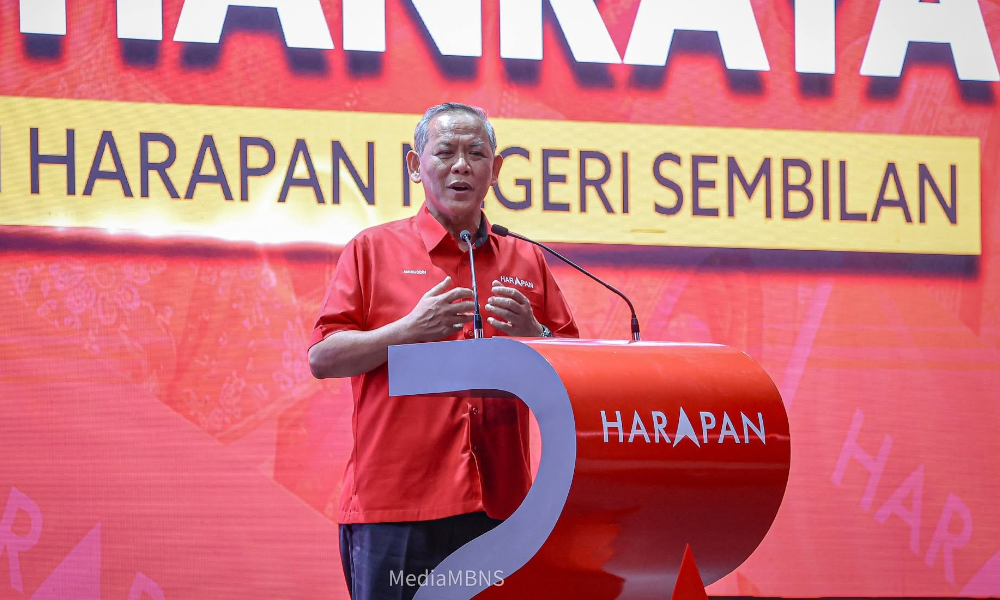
When 14 Negeri Sembilan Umno assemblypersons withdrew support from caretaker menteri besar Aminuddin Harun in April, Harapan denounced the move as an “act of betrayal”. The response was telling.
A withdrawal of legislative confidence could have been discussed as a constitutional manoeuvre, an internal revolt, or a breakdown in coalition bargaining. Instead, it was moralised as disloyalty.
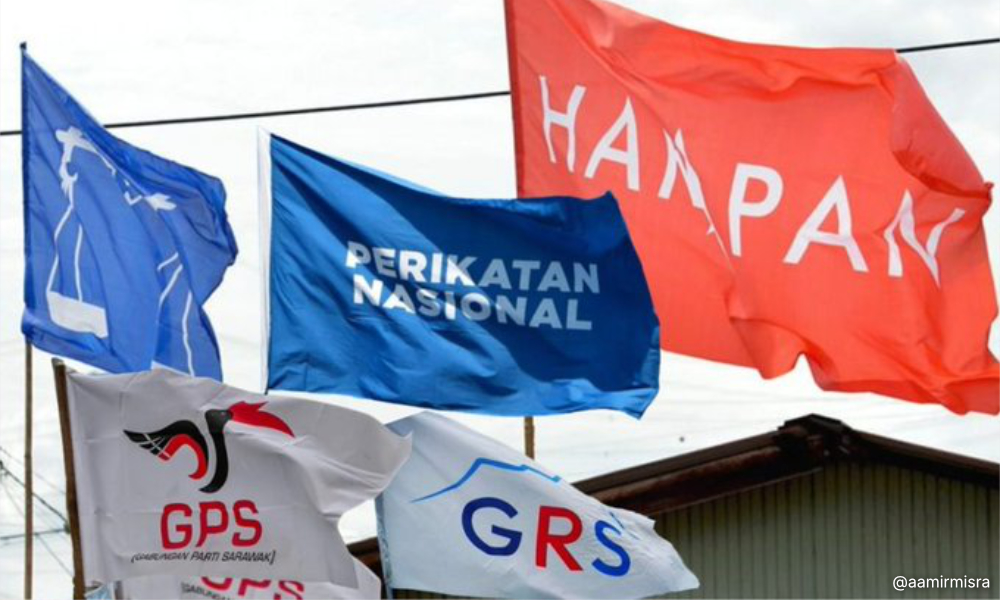
After PAS formally ended its cooperation with Bersatu on June 8, it swiftly backed Hamzah Zainudin’s Parti Wawasan Negara for admission into PN. The sequence made the accusation of “khianat” almost inevitable.
This rhetoric is not incidental. It reveals the underlying norms through which coalition change is interpreted and justified.
In a more programmatic political order, parties may enter or leave alliances because of shifts in policy preferences, electoral incentives, or governing priorities.
Such decisions may still be criticised as opportunistic, but they are judged primarily as strategic or ideological choices rather than as acts of personal betrayal.
In Malaysia, however, political alliances are frequently narrated as relationships of trust, debt, and reciprocal obligation.
A coalition partner is not merely a temporary collaborator. It becomes part of a network whose members are expected to honour an unwritten hierarchy of loyalty.

This resembles the logic political scientists associate with patrimonial and neo-patrimonial systems in which formal institutions exist, but political authority continues to operate through personal networks, reciprocal protection, and expectations of fidelity.
Under such conditions, the collapse of an alliance is experienced not simply as a strategic realignment but as a violation of the relationship that sustains access to power.
The term “amanah” (trust) intensifies this moral register. In Malay political discourse, amanah does not mean ordinary contractual trust. It suggests a responsibility held in custody, often with ethical or sacred overtones.
To violate an amanah is therefore not merely to make a different political calculation. It is to betray an obligation.
Yet the boundary between legitimate political adjustment and illegitimate khianat is always drawn selectively. The accusation of betrayal, therefore, does not describe a stable ethical standard.
It performs a political function. It legitimises one network’s claim to loyalty while criminalising the rival network’s attempt to reorganise power.
In this sense, khianat is less an explanation than a weapon. It transforms a contest over office, patronage, and institutional control into a drama of virtue against treachery.
It allows political actors to avoid explaining the material reasons for a rupture, such as leadership ambitions, seat allocations, access to resources, or control of appointments, by recasting the conflict as a test of character.
Political parties as property
The deeper problem is not simply that Malaysian politicians are unusually emotional about loyalty. It is that political organisations are repeatedly treated as forms of property.
Leaders speak as though they possess parties. Parties speak as though they possess constituencies. Coalitions speak as though they possess the votes previously cast for them.
Institutions are approached as assets to be inherited, guarded, or transferred through elite negotiation.
This is why defections are so easily described as theft or betrayal. The departing politician is imagined to have taken something that rightfully belonged to the organisation: a seat, a support base, a faction, or a portion of the state.
But elected representatives do not own their seats. Parties do not own voters. Coalition leaders do not inherit permanent rights over public institutions. All hold power conditionally, and only for as long as citizens continue to grant it.
The language of khianat obscures this democratic principle. It shifts attention away from accountability to voters and toward fidelity among elites.
This inversion reveals where the real centre of obligation lies. The primary political relationship is not imagined as one between representative and citizen. It is imagined as one between patron and follower, leader and faction, party and component party.
The result is a democracy in which elections determine the numerical distribution of seats, but elite networks continue to determine the meaning and use of those seats.
Implications for GE16
The central implication for GE16 is not simply that policy may once again take a back seat. It is that political competition is increasingly organised around rival claims of ownership; ownership of parties, constituencies, coalitions, and, ultimately, the state itself.
The most consequential decisions may therefore continue to be made beyond the ballot box.
Coalition formation, leadership succession, seat allocation, and institutional control will be negotiated among political elites who treat alliances and voter blocs as assets to be retained, inherited, traded, or reclaimed.
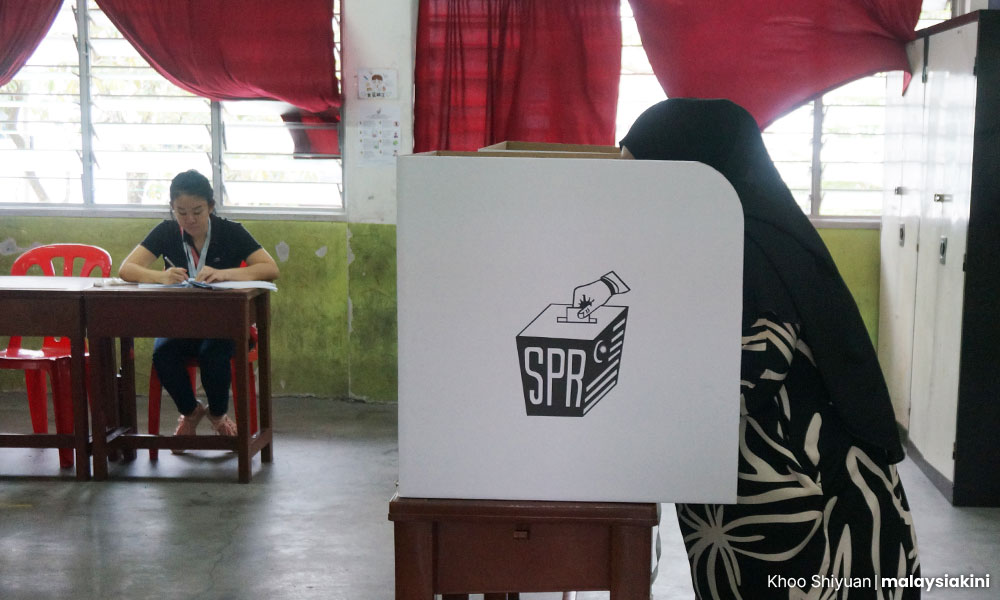
GE16 will offer competing coalitions, but the competition itself has been hollowed out. Rather than contesting fundamentally different projects for Malaysia, the major blocs are increasingly competing for electoral authorisation to consolidate their control over the state.
That distinction matters. A functioning democracy does not merely allow voters to replace one set of political custodians with another. It requires parties to explain what they intend to do with power, whose interests they will serve, and what kind of country they seek to build.
The politics of khianat evades those questions. It turns elections into moral trials of loyalty while leaving the distribution and purpose of power largely untouched.
It asks who betrayed whom, but not who has failed the public.
GE16 will produce winners and losers. It may reshuffle coalitions, revive old parties, and bury newer ones.
But unless Malaysian politics moves beyond the language of ownership, inheritance, and betrayal, the election will not resolve the country’s deeper democratic crisis. - Mkini
KHOO YING HOOI is an associate professor at Universiti Malaya.
The views expressed here are those of the author/contributor and do not necessarily represent the views of MMKtT.

No comments:
Post a Comment
Note: Only a member of this blog may post a comment.