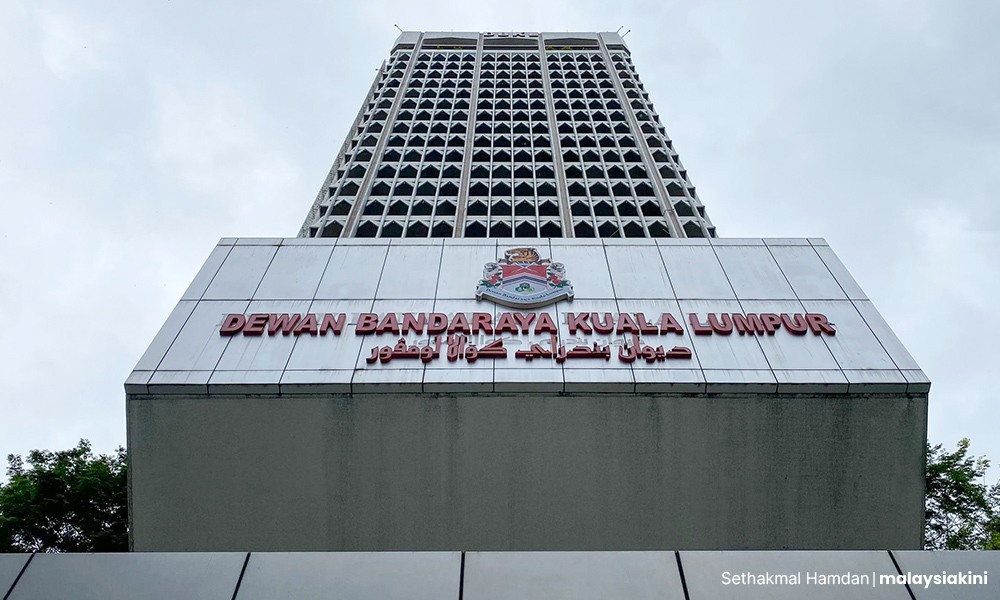
PAC not satisfied with govt for rejecting DBKL appointed councillor system suggestion
The Public Accounts Committee (PAC) has expressed dissatisfaction with the government’s response to several recommendations in the PAC report on Kuala Lumpur land development.
This is particularly over the decision to reject the recommendation to amend the relevant legislation to establish an appointed councillor system for the Kuala Lumpur City Hall (DBKL).
In a statement yesterday, PAC chairperson Mas Ermieyati Samsudin warned that the move could weaken efforts to strengthen transparency and checks and balances in the capital’s administration.
“The PAC is of the view that the failure to implement the proposed amendments to create an appointed councillor system for DBKL could undermine efforts to strengthen the agenda of checks and balances.
“Relying solely on existing internal administrative reforms is insufficient to guarantee organisational transparency due to the absence of structural reforms within DBKL,” Mas Ermieyati (above, centre) said.
The statement came after a follow-up proceeding held with representatives from the Federal Territories Department, DBKL, the Irrigation and Drainage Department, the director-general of Lands and Mines, and the Federal Territories Land and Mines Office.
The committee further reiterated its recommendation that the chair of the Federal Territories Kuala Lumpur Land Committee be returned to the federal territories minister. However, it acknowledged that the matter remains subject to cabinet consideration.
PAC said restoring the minister as chair would strengthen democratic accountability over land development decisions in Kuala Lumpur.
Lack of transparency
Another issue raised by the committee was the lack of meaningful engagement with Kuala Lumpur MPs on land alienation.
While MPs have access to DBKL’s One Stop Centre system, the PAC said approvals under the land committee continue to be made without meaningful consultation with elected representatives.
It said the lack of transparency makes it difficult for MPs to explain land alienation and land development decisions or respond to residents’ objections in their constituencies.
The PAC also called on the government to give greater attention to comprehensive structural reforms, noting that many of its critical policy recommendations continue to be referred back to the cabinet for consideration.
It urged Putrajaya to demonstrate genuine political will by reconsidering the committee’s recommendations to show its commitment to resolving governance issues involving land management and development in Kuala Lumpur.
“The PAC is concerned that the voices of the people will continue to be sidelined, ultimately jeopardising public well-being as a whole,” Mas Ermieyati said.
The government had announced that it would not proceed with an appointed councillor system for DBKL, choosing instead to strengthen the city’s existing governance framework.
Minister in the Prime Minister’s Department (Federal Territories) Hannah Yeoh said the decision followed a four-month feasibility study by the International Islamic University Malaysia, which found that introducing councillors could create an additional layer of decision-making, leading to overlapping responsibilities and unclear accountability.
Hannah Yeoh
Instead, the study recommended improving DBKL’s existing governance mechanisms, including strengthening its advisory board and enhancing the oversight role of Kuala Lumpur MPs through regular engagement, monitoring committees, and formal channels to raise constituents’ concerns.
Following the study, the cabinet directed the Federal Territories Department to prioritise governance, accountability and checks and balances within DBKL before considering amendments to the Federal Capital Act 1960.
PAC’s recommendations
The PAC’s recommendation for an appointed councillor system was among the proposals in its report on Kuala Lumpur land development, which was tabled in Parliament in August last year, after an inquiry into governance and transparency issues involving land approvals in the federal capital.
In its report, the PAC had recommended a series of reforms to improve governance over Kuala Lumpur’s land development, including:
Establishing a permanent committee on Kuala Lumpur land affairs involving federal territories MPs to oversee land alienation and development.
Returning the chairmanship of the Federal Territories Kuala Lumpur Land Committee to the federal territories minister to strengthen democratic accountability.
Amending the Federal Capital Act 1960 and Town and Country Planning Act 1982 to introduce an appointed DBKL councillor system to enhance checks and balances.
Ensuring all land use decisions comply with the Kuala Lumpur Structure Plan and Local Plan, with any deviations publicly justified.
Requiring government land sales to be conducted transparently through open tender instead of direct negotiations.
Revising the land premium calculation formula to better reflect market value and prevent government land from being alienated below market prices.
Strengthening Kuala Lumpur’s climate resilience by ensuring flood retention ponds meet the required flood protection standards.
Vesting ownership of land containing Drainage and Irrigation Department assets with the department to safeguard flood mitigation infrastructure.
Ensuring developments on river reserve land do not compromise river functions or increase the risk of floods and landslides.
Reviewing the land alienation and development concept of the Kampung Bohol flood retention pond project to safeguard transparency and the public interest.
Making DBKL’s OSC 3.0 Plus system, which contains information on government-owned land, publicly accessible as soon as possible.
Last November, seven Kuala Lumpur MPs submitted a Private Members’ Bill seeking to amend the Federal Capital Act 1960, in what they describe as a long-overdue reform to curb the concentration of power in the hands of Kuala Lumpur’s mayor.
The government backbenchers were instead seeking the introduction of a councillor-based governance system for the nation’s capital. - Mkini
No comments:
Post a Comment
Note: Only a member of this blog may post a comment.




No comments:
Post a Comment
Note: Only a member of this blog may post a comment.