


Sovereignty is an amanah, authority is restrained by justice, and the endurance of a state depends not upon power, but upon righteousness.
From the Tengku Ampuan of Pahang, Tunku Azizah Aminah Maimunah Iskandariah
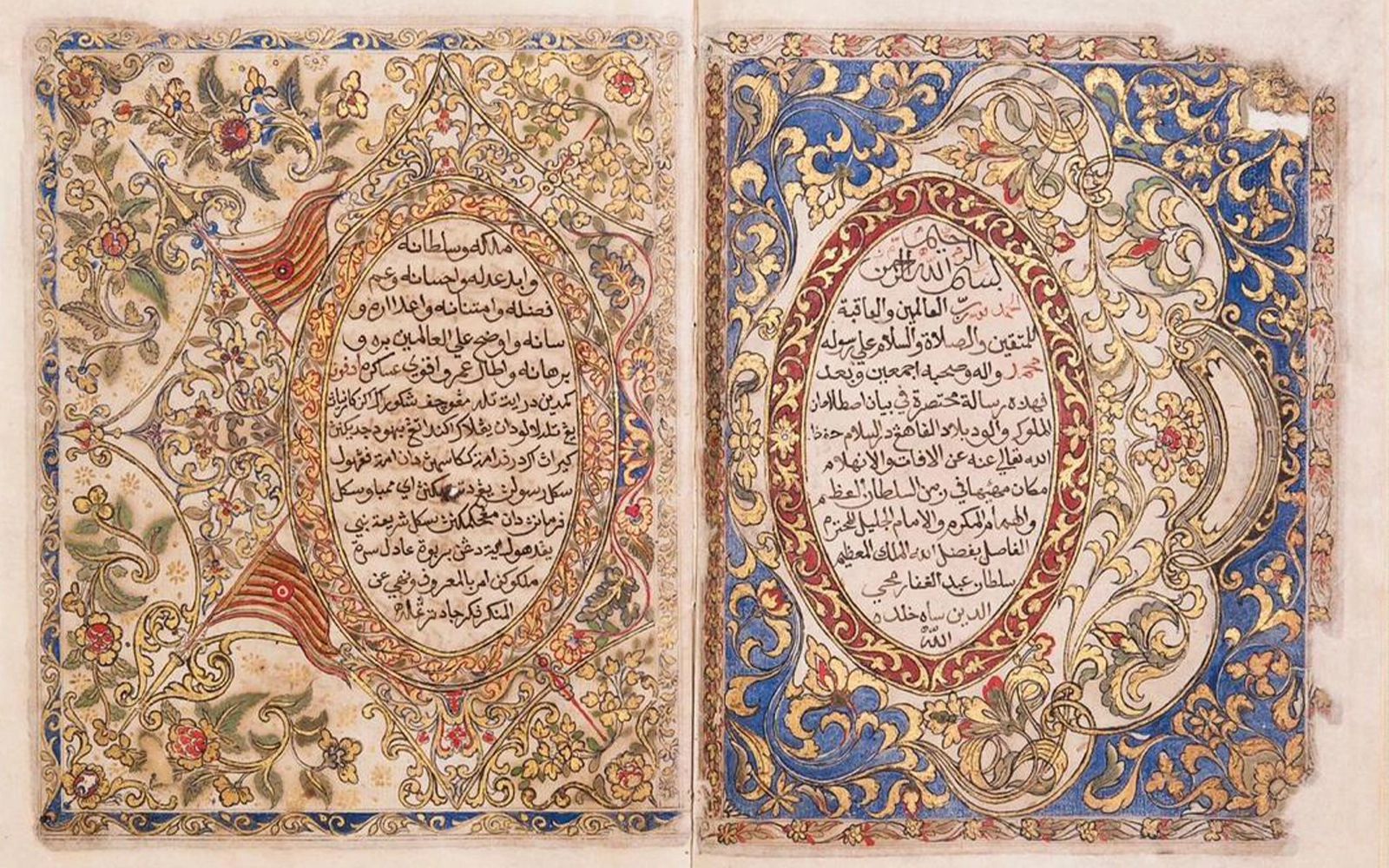
The Hukum Kanun Pahang is known as the Manuskrip Agung Negeri Pahang not because it belongs to Pahang alone, but because Pahang was entrusted to preserve it on behalf of Malaysia and the wider Malay world. In preserving the manuscript, Pahang also preserved a constitutional memory, an intellectual inheritance, and a civilisational legacy that continues to speak across the centuries.
This study was born not merely of scholarship, but also of affection, for a land, a people, and a legacy entrusted to me through history, marriage, and faith. My journey into the Hukum Kanun Pahang has been inseparable from my own journey into Pahang itself: a state that embraced me, shaped me, and gave me a home rooted in dignity, continuity, and service. What I have written here is therefore not entirely detached observation. It is also the reflection of one who has lived within the constitutional tradition she has sought to understand.
Throughout this journey, I repeatedly encountered the same question: Why do some civilisations endure while others fade into memory?
In seeking an answer, I came to appreciate that the true strength of Pahang has never rested upon power alone. It has rested upon its ability to preserve continuity while adapting to changing circumstances. The state has never remained frozen in the past, yet neither has it abandoned the traditions that gave meaning, legitimacy, and coherence to its institutions. This balance between preservation and renewal has been one of the foundations of its endurance.
Throughout Malay history, the Sultan has often been described as the payung negeri, the umbrella beneath which justice, faith, security, and public welfare find shelter. It is a beautiful metaphor because it captures one of the deepest principles of Malay-Islamic kingship: authority exists not for domination, but for protection. The ruler governs not for himself, but for those whom Allah has entrusted to his care.
The Qur’an reminds us:
“Indeed, Allah commands you to render trusts (amanah) to whom they are due, and when you judge between people, judge with justice.”
Surah al-Nisāʾ (4:58)
This verse captures the constitutional philosophy that runs throughout the Hukum Kanun Pahang. Leadership is not a privilege to be enjoyed, but an amanah to be discharged. Justice is not merely an administrative duty; it is an act of worship before Allah.
As Tengku Ampuan of Pahang and a Princess of Johor, I offer this study as a voice from within the institution. It is written both as scholarship and as remembrance; both as historical inquiry and as an expression of gratitude for having inherited a living constitutional tradition. What began as an academic study gradually became a journey into constitutional memory, civilisational continuity, and the enduring relationship between Hukum Allah, sovereignty, justice, and moral responsibility.
The Hukum Kanun Pahang may rightly be regarded as one of the greatest intellectual monuments of Malay civilisation. Unlike monuments built of stone, it preserves a constitutional vision of governance, kingship, law, and moral order. Through its pages survives not merely the legal tradition of a kingdom, but the intellectual achievement of a civilisation that sought to harmonise faith, law, and authority under the sovereignty of Allah.
The Hukum Kanun Pahang is not Pandora’s Box. It is a treasure chest. Every time one imagines that its contents have been exhausted, another compartment opens. Each reading reveals another insight, another forgotten voice, another path waiting patiently to be explored. The manuscript has taught me that history is never truly silent. It speaks to those who are willing to listen. This thesis, then, is my offering.
As a Muslim, a wife, a mother, and a custodian of heritage, I write with humility and gratitude for having been granted the opportunity to serve a legacy greater than myself. To champion the Hukum Kanun Pahang is, for me, to honour the past, educate the present, and safeguard the future.
As this thesis drew to its conclusion, I found myself reflecting not only upon what the manuscript had taught me about the past, but also upon what it now asks of the future.
When I thought of my own son, I realised that the greatest inheritance I could leave him was not privilege or position, but the constitutional and moral wisdom that I had spent this journey rediscovering.
To him, I wrote:
“My son Hassanal Ibrahim Alam Shah, never forget: all that you possess belongs to Allah alone, and it is entrusted to you so that you may strive in His cause, uphold justice, serve His creation, and bring order to the world.
Power may grant authority, but it is justice that preserves a state. Guard the balance of justice carefully, for when it is disturbed, the state is brought to ruin.
A state is not built by stone or force, but by fairness, restraint, and moral courage. Be just in all matters, and give to each what he rightfully deserves.
For when justice stands firm, the state endures; but when justice falters, no throne, no army, and no wall can save it.”
As I set down these words, I realised that they were not mine alone. They echoed the same constitutional philosophy that runs throughout the Hukum Kanun Pahang: that sovereignty is an amanah, authority is restrained by justice, and the endurance of a state depends not upon power, but upon righteousness.
Perhaps that is the greatest inheritance any generation can leave to the next, not privilege, nor power, but the wisdom to govern with justice, humility, and faith. The inheritance of knowledge carries with it a responsibility. To inherit is not merely to receive; it is also to preserve, understand, and faithfully transmit what has been entrusted to us.
Like every constitution, the Hukum Kanun Pahang articulated an ideal of governance rather than a guarantee of perfect governance. History demonstrates that rulers and societies do not always live up to the constitutional standards they inherit. Yet this does not diminish the significance of the HKP. On the contrary, its enduring value lies precisely in providing the constitutional and moral standard by which rulers, institutions, and society alike may be measured across generations.
The Hukum Kanun Pahang now stands ready to speak once again, not only to Malaysia, but also to the wider world. It deserves to be studied, translated, digitised, exhibited, and recognised as one of the great constitutional achievements of the Malay-Islamic world. If these pages have helped restore even a small part of that constitutional memory, and encouraged others to look anew at the constitutional heritage of the Malay world, then they have fulfilled the purpose for which they were written.
Looking back upon this study, I no longer see it simply as the product of my own effort. I see it as an amanah that Allah allowed me to carry for a brief moment in time.
May Allah accept this small effort as ʿilm nāfiʿ (beneficial knowledge), place barakah in every page, forgive its shortcomings, and allow the Hukum Kanun Pahang to continue guiding hearts and minds for generations yet to come.
Yet Allah knew.
He preserved it.
He returned it.
And He allowed me to rediscover it.
Alhamdulillāhi Rabbil ʿĀlamīn. - FMT
The Tengku Ampuan of Pahang, Tunku Azizah Aminah Maimunah Iskandariah, is a master’s candidate at the International Institute of Islamic Thought and Civilisation (ISTAC), International Islamic University Malaysia.

No comments:
Post a Comment
Note: Only a member of this blog may post a comment.