


The Malaysian Bar takes note of the tabling of the long-overdue Freedom of Information Bill 2026 in Parliament on July 13.
However, we regret to note that the FOI Bill falls far short of complying with international standards. It appears overly focused on procedures to obtain information held by public authorities.
Such procedures could be easily implemented by public authorities using internal guidelines and standard operating procedures, without the need for an FOI Bill.
Shockingly, the proposed Clause 22 of the FOI Bill purports to provide as follows:
“Nothing in this Act shall be construed as fundamental liberties under Part II of the Federal Constitution.”
Clause 22 is regressive and purports to dial back advances in freedom of information law and rights in Malaysia.
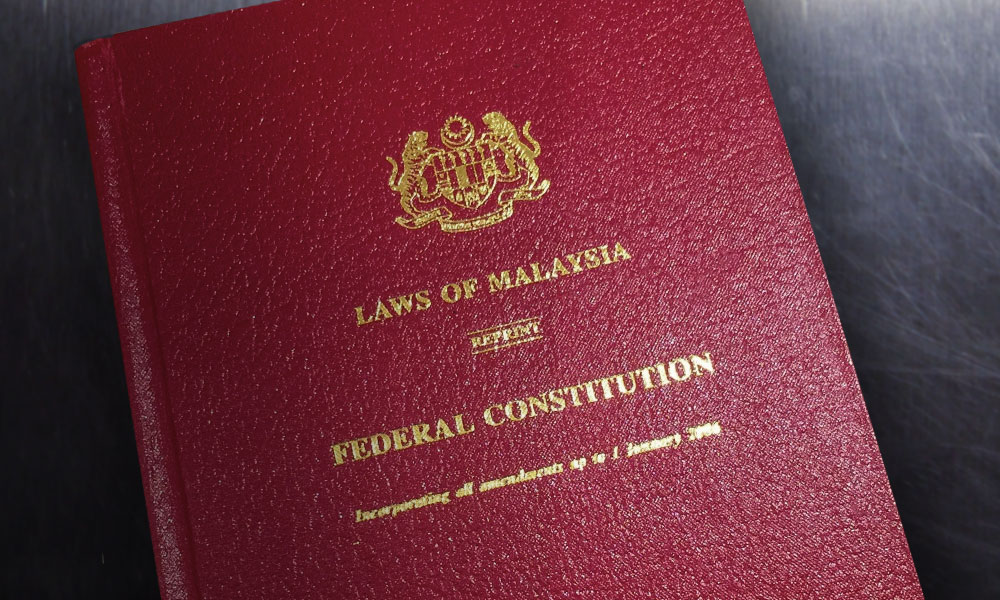
Even if enacted, it would be of doubtful legality and, in any case, undermines the object, purpose, and legitimacy of the FOI Bill and is incompatible with modern developments in freedom of information rights.
Clause 22 must be deleted or materially altered to acknowledge freedom of information as a constitutional right.
In this regard, the referral of the FOI Bill to a parliamentary special select committee (PSSC) for further consideration presents an opportunity to ensure that the Bill is significantly enhanced to advance transparency, accountability, and the public’s right to know.
An FOI Bill cannot be taken and viewed in isolation from the broader environment within which journalists operate.
‘Seven swords’
The Bar notes with concern the remarks by Kuik Cheng Kang, group editor-in-chief of Media Chinese International Limited, that there are “seven swords” hanging over the heads of newspaper editors and journalists in Malaysia, which are:
(1) Official Secrets Act 1972 (the Bar passed a resolution calling for the immediate repeal of sections 2A, 2B, and 16A);
(2) Printing Presses and Publications Act 1984 (the Bar has issued press releases to call for its repeal);
(3) Sedition Act 1948 (the Bar has called for its repeal through press releases and Bar resolutions);
(4) Defamation Act 1957;
(5) Communications and Multimedia Act 1998 (the Bar passed a resolution to call for the repeal of sections 233, 252, 263, and similar vague provisions in the Act and issued press releases to call on the government to repeal sections 233 and 263);
(6) Various offences under the Penal Code (provisions such as section 505[b], which criminalises publication of reports that may cause public fear or alarm, should not be used to fetter freedom of the press); and
(7) Cybercrimes Bill 2026, recently passed by the Dewan Negara (Senate) and Dewan Rakyat (House of Representatives).

As articulated by Kuik, the cumulative effect of the foregoing is that journalists must operate within the confines of these restrictive laws to avoid investigations, prosecutions and other repercussions.
Outline of needed changes
The Bar calls upon the PSSC to urgently address the following:
(1) As the FOI Bill fails to recognise the constitutional right to information as held by the Federal Court in the case of Sivarasa Rasiah, Clause 22 of the Bill must expressly acknowledge this constitutional right;
(2) Clause 6 of the FOI Bill should be amended to remove all unnecessary restrictions on who may request information. Under the Bill, a Malaysian who does not fall within the purposes specified in subclause 6(1)(a) to (c) can only request information in reliance upon subclause 6(1)(d) which requires a requestor to demonstrate “proper and tangible interest” and prove they have been “prejudiced” by a public authority, and yet the Bill does not define these terms. These are vague and unnecessary obstacles that are incompatible with principles of freedom of information;
(3) The FOI Bill must include a “harms test” requiring public officers to weigh whether a disclosure of information will cause more harm than the public interest benefits from the release of information, before refusing a request, and any and all refusals must be explained with written reasons;
(4) Clause 12 of the FOI Bill is overly lengthy and exclusionary and must be narrowed to comply strictly with the permissible restrictions under Article 10(2)(a) of the Federal Constitution. Taken as a whole, the broad exemptions under the Bill in its present form, the absence of a mandatory duty of proactive disclosure in Clause 21, and the continued protection afforded to official secrets significantly curtail public access to information, thereby leaving very little information readily accessible to the public;
(5) Offences for misuse of information, supply of false information and obstructing disclosure in Clause 18(1)(c) of the Bill, which provides a fine not exceeding RM100,000, an imprisonment term of up to five years, or both, should be removed. These sanctions are excessively punitive, and the possibility of facing such heavy sanctions may deter requests and is wholly incompatible with the object and purpose that an FOI Bill should strive for, that is, there should be more openness and transparency under the Bill, not more restrictive laws; and
(6) Clauses 13 to 17 give oversight to “the Ombudsman” - a body that does not even exist yet. The enabling Bill for the ombudsman has not been tabled - a fact that the Bill’s own explanatory statement concedes. The Bill must establish an independent oversight body with binding decision-making power, authority to inspect records and compel disclosure, and protection from interference in its appointment and funding.
Passing the FOI Bill in its current form would be a disservice to the country.
Malaysia deserves an effective and robust Freedom of Information Act that recognises freedom of information as a constitutional right, protects whistleblowers, enables public participation in governance, and strengthens investigative journalism.
We urge the PSSC to implement the foregoing objects and to give Malaysia a robust and meaningful FOI Act and to overhaul and rectify the regressive Bill in its present form. - Mkini
ANAND RAJ is president of the Malaysian Bar.
The views expressed here are those of the author/contributor and do not necessarily represent the views of MMKtT

No comments:
Post a Comment
Note: Only a member of this blog may post a comment.