


State polls are easily underestimated. It arrives with local candidates and grievances, yet it carries a nationwide perception.
Negeri Sembilan voters will decide the composition of a 36-seat assembly on Aug 1. At first glance, it is merely another state election in an already crowded electoral calendar.
Nevertheless, it is something rather more consequential, the first meaningful audit of the unity government coalition since Pakatan Harapan and BN began the incongruous experiment of governing as partners rather than as adversaries.
State elections have long served as barometers of national confidence, offering an early reading of local sentiments that only later register at the federal level.
They test not policy but chemistry, not manifestos but trust in the party.
Negeri Sembilan election matters because it asks to what extent the two coalition members, politically aligned at the federal level, persuade their own supporters to vote as two opposing blocs.
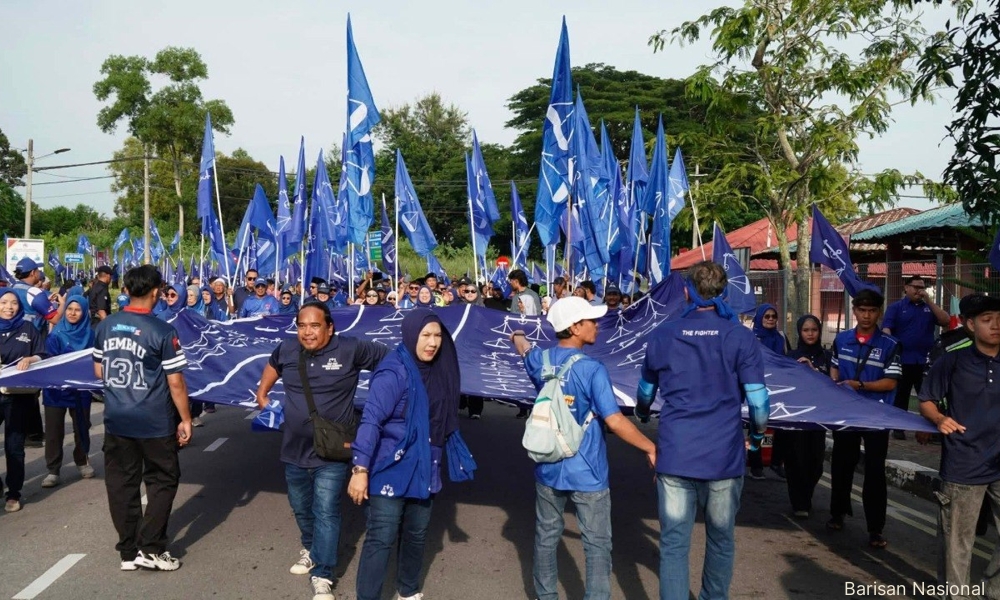
Yet to find its rhythm
The political alignment between Harapan and BN is driven more by strategic calculations than by ideological affinity.
Umno and DAP, their two ideological poles, built their identities in opposition to each other, and the collective memory of that rivalry does not dissolve because their leaders now sit at the same cabinet table together.
Pacts are signed by the party’s elites, nonetheless, grassroots legitimacy is earned far more slowly.
Will an Umno stalwart lend a vote to a DAP candidate or will a Harapan supporter reward a former opponent when the two are asked to cooperate rather than merely co-exist?
The recent Johor state election provided a sobering first data point. On July 11, BN swept 48 of the 56 seats, a two-thirds supermajority, while Harapan was reduced to eight seats, and Bersatu was completely wiped out. As for the record, Johor was the BN’s heartland.

Negeri Sembilan inverts the arrangement. Harapan is the senior coalition member defending the state government, with Umno now a nominal rival rather than a junior ally.
Therefore, to what extent can Harapan win the state election with Umno-BN widely perceived as drawing closer to PAS?
Reading the two scenarios
First, consider a plausible scenario in which Harapan underperforms or cedes significant ground to BN.
A defeat in the state which Harapan has held since 2018 would be less of a local rebuke than a verdict on the Madani project itself.
The prime minister's authority rests not on parliamentary arithmetic alone but on the argument that he can command a plurality of Malay support without conceding to conservative pressures.
A loss here would erode that argument at precisely the moment Umno is weighing whether the coalition still serves it well.
BN would arrive at the next round of federal bargaining with an upper hand, more cabinet leverage, and more claim to shape the government's Malay-facing agenda.
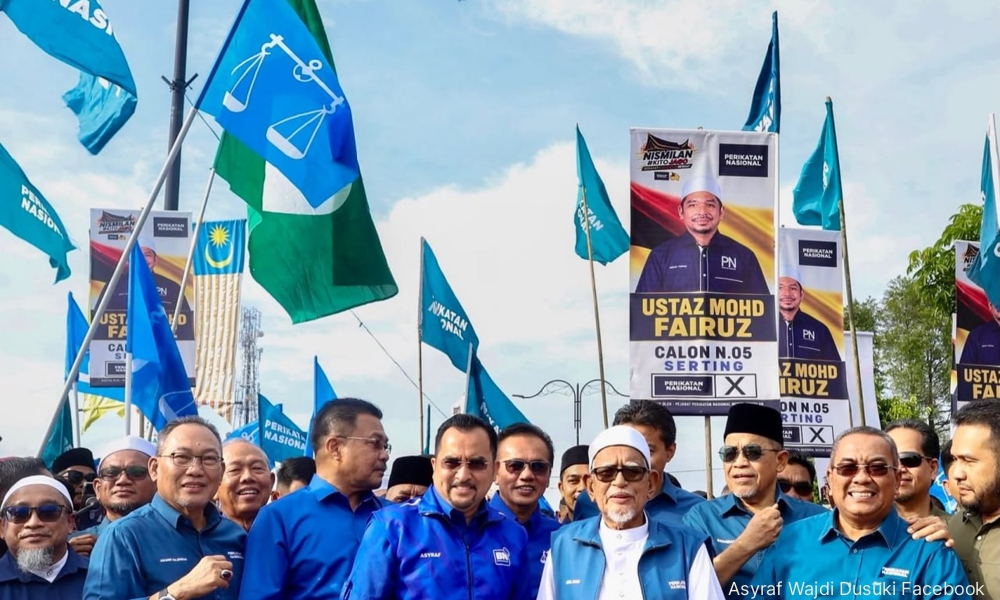
Having spent two years consolidating in the northern belt, PAS would read Negeri Sembilan as evidence that the “Green Wave” has now extended south, a narrative it would carry into the 16th general election regardless of whether the seat mathematics justified it.
Coalition discipline, already thin, frayed further as each partner began to campaign against the other's record. Markets would price this as elevated political risk rather than a crisis.
The ringgit and Bursa have historically absorbed state-level results with equanimity, but sustained doubt about whether the government can serve its full term tends to register in delayed investment decisions rather than immediate selling.
The opposition would frame the outcome as the beginning of a decline, and framing, in Malaysian politics, has a way of becoming a prophecy.
The second scenario has its own logic as follows. A Harapan victory would give the unity government something it has not yet earned: electoral proof that the coalition is more than an arrangement of convenience.
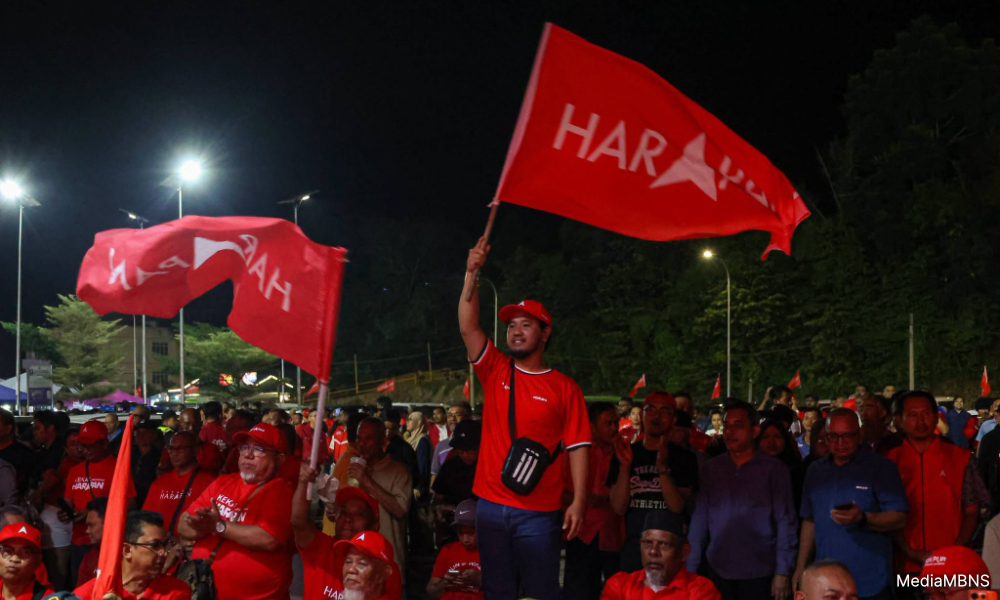
This would demonstrate, at least provisionally, that supporters can be persuaded to transfer trust across old dividing lines, and that would give Umno a material reason to remain: a partnership that wins is a partnership worth keeping.
Investors would read the result as a reduction in uncertainty rather than as an endorsement, which is the more durable form of confidence in any case, and one that supports the continuity of fiscal consolidation and subsidy reform already underway.
PAS would be obliged to reconsider whether its strategy can breach the peninsular centre or whether it must broaden its appeal to do so. However, a victory would prove less than its beneficiaries would claim.
Negeri Sembilan is a state where Harapan's demographic base is unusually favourable, and a win there tells us little about Kedah or Terengganu.
A single result does not consolidate coalitions, the accumulation of results consolidates them, each making the next cooperation slightly easier to justify to a sceptical base. Durability is earned in instalments, not declared in victory speeches.
Royal dimension
Negeri Sembilan carries a constitutional distinctiveness no other state shares.
In this state election, the constitutional monarchy has been under visible strain, following the removal of an undang (territorial chieftain) and a subsequent dispute regarding the institution of the ruler.
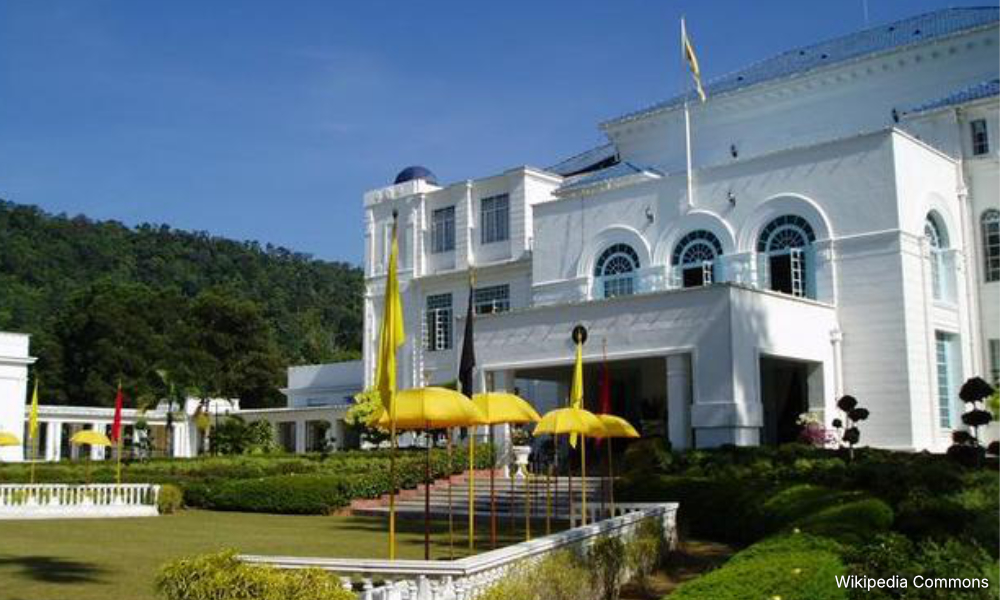
The details remain contested and are proper matters for the state’s own customary and legal processes, not for speculation.
The constitutional dispute has introduced an additional layer of political risk into the campaign. Once competing parties are perceived to be associated with different sides of a royal controversy, the election ceases to be judged solely on governance and policy.
It also becomes a contest over institutional legitimacy, a development that benefits neither the political system nor the monarchy itself.
What can be said with care is that when an election unfolds against the backdrop of tension within revered institutions, political actors bear heightened responsibility to avoid any perception that those institutions are being drawn into partisan contests.
Public confidence in traditional authority rests on its being seen as above the fray, and that confidence is far easier to erode than to be restored.
Beyond Negeri Sembilan
Elections are, ultimately, instruments of measurement. They test coalition discipline and public trust, the quality of leadership and the cohesion of those who govern together, and the resilience of institutions asked to hold steady while politics churn around them.
A state election of 36 seats will not decide the fate of the federal government.

Nevertheless, it will yield the clearest signal yet of whether the unity government experiment has taken root in the electorate or merely in the calculations of its elites.
Federal stability is not conferred from above; it is validated from below, one constituency at a time.
The Negeri Sembilan election may ultimately be remembered not simply as another state poll, but as the real measure of the durability of the coalition government at the federal level. - Mkini
RIZAL HAMDAN is senior program officer at Merdeka Centre, focusing on geopolitics and foreign affairs.
The views expressed here are those of the author/contributor and do not necessarily represent the views of MMKtT.

No comments:
Post a Comment
Note: Only a member of this blog may post a comment.