


There is a claim about Malay history that gets repeated so often, and so confidently, that almost nobody stops to check it: that Tanah Melayu - the Malay Peninsula – has always been the ancestral homeland of the Malays.
It is treated less as an argument than as common knowledge. A closer examination of the historical record, however, reveals a rather different picture.
To be clear, nobody disputes that the peninsula became the heart of Malay civilisation. This is where the great sultanates rose, where the Malay language reached its highest prestige, where Islam took deep root, and where Malay custom matured into one of Southeast Asia’s most enduring civilisations.
None of that is in question here.
What I want to ask is a narrower question: not where Malay civilisation reached its fullest expression, but where the Malays first emerged as a people at all.
These are two different questions, even though they tend to get collapsed into one - and the answer to the second, I would argue, is not found in modern political rhetoric. It is found in the evidence.
Tracing the origins
No single source can tell us where the Malays came from. Archaeology, linguistics, genetics and written records each capture a different slice of a very long story, but put together, they point broadly in the same direction.
Many scholars now accept that the ancestors of the Malays were part of a much larger Austronesian-speaking population that began expanding out of Taiwan roughly four thousand years ago.
Over the following centuries, these communities spread through the Philippines and into Island Southeast Asia, splitting into dozens of distinct societies with their own languages and cultures.
The Malays were one of the peoples that eventually emerged from this process.
It would be a mistake, though, to compress all this into the shorthand that “the Malays came from Taiwan”. That badly oversimplifies what was a slow, layered process of migration, mixing and state-building spanning thousands of years.
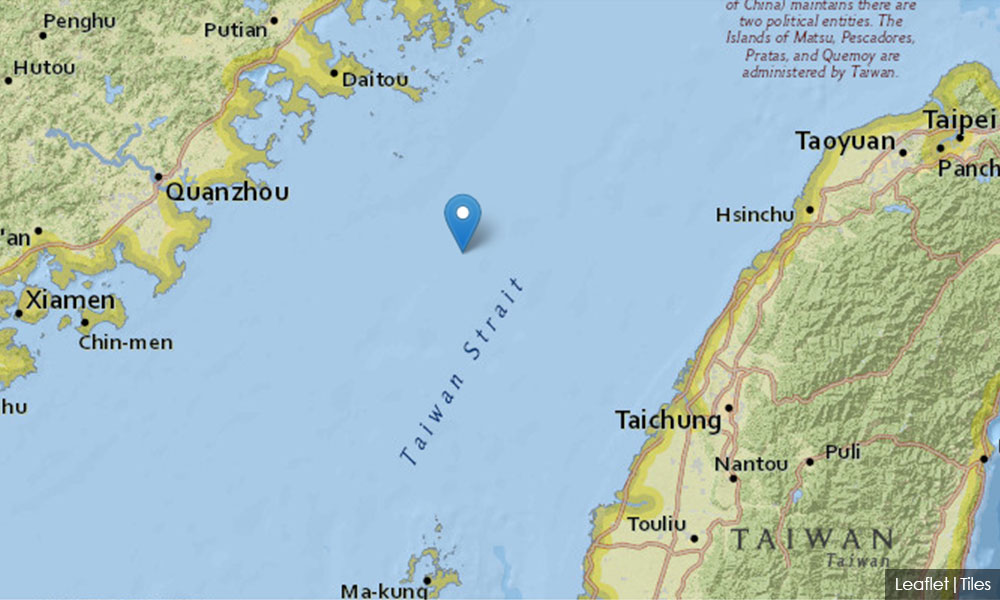
The Malays, as we would recognise them, did not exist yet when that expansion began - they took shape much later, inside Island Southeast Asia itself, through contact, adaptation and the gradual formation of states.
So where exactly did that happen? Several of the earliest written sources point to the same answer: southeast Sumatra, not the Malay Peninsula.
Chinese records from the 7th century mention a kingdom called Mo-lo-yu, or Malayu, in the Jambi region.
Centuries later, the Javanese court poet Mpu Prapanca, in his book titled “Desawarnana”, also located Melayu in Sumatra. Writing in the early 16th century, the Portuguese apothecary Tomé Pires associated Tanah Melayu with an area near Palembang.
What is striking here is not just what these sources say, but who is saying it.
A Chinese court chronicler, a Javanese poet and a Portuguese apothecary had nothing in common - different centuries, different civilisations, different reasons for writing. Yet they all locate the same region as the birthplace of Melayu.
What modern historians say?
Modern historians back this up. Leonard Andaya has argued that “Malay” originally referred to communities in southeast Sumatra, only later expanding to cover other Malay-speaking populations.
OW Wolters went further, describing the southeastern coast of Sumatra as the heartland of the early Malay seafaring world.
When four independent traditions - separated by centuries and by civilisation - line up this closely with each other and with modern scholarship, that is not a coincidence worth dismissing.
This should not really be controversial if you think about it. Peoples migrate. They build new centres of power.
They turn unfamiliar land into the heartland of a civilisation that had not previously existed there. The English did not originate in London. The Turks did not first emerge in Anatolia.
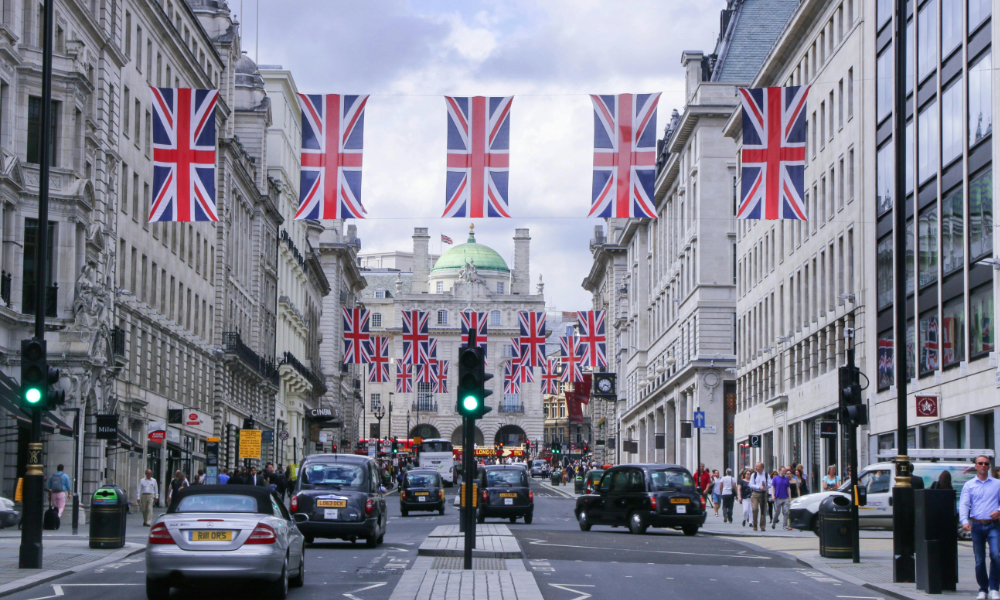
Recognising southeast Sumatra as the Malays’ earliest home does not take anything away from what they went on to build on the peninsula.
If anything, it explains it.
How the peninsula became Tanah Melayu
For more than 2,000 years, the Straits of Malacca connected the Indian Ocean to the South China Sea - one of the busiest sea lanes on earth.
Rather than dividing Sumatra from the peninsula, the straits bound them together. Traders crossed back and forth. So did scholars, religious teachers and ruling families.
Alliances were made, trade networks grew, and cultural habits moved freely between both shores long before Malacca ever existed.
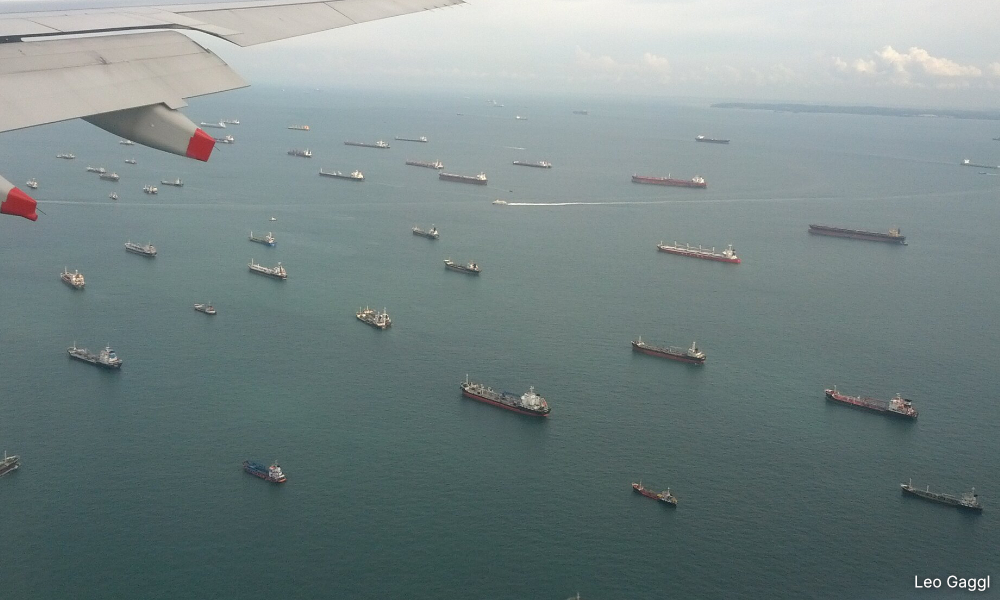
It was this constant traffic across the straits that eventually pulled the centre of gravity of Malay civilisation away from Sumatra and onto the peninsula.
The turning point came with the founding of the Malacca Sultanate around 1400. Its founder, Parameswara, was a prince from Palembang - in other words, from the old Sumatran heartland.
His crossing to the peninsula was not an isolated event; it was really just the most consequential instance of a movement that had been building for generations, as Malay rulers, traders and settlers kept crossing the straits in search of new opportunities.
Malacca had one enormous advantage: location. Ships from China, India, the Middle East and across the archipelago all converged there, turning it into more than a trading post – it became a hub of diplomacy, scholarship and religious exchange.
Malay became the language of regional trade. Islam embedded itself in the political and social life of the region. Malay ideas about kingship, law and court culture became the template that later sultanates across maritime Southeast Asia would copy.
It is fitting that Andaya calls Malacca the “standard-bearer” of Malay civilisation.
As Malacca’s influence grew, so did the meaning of the word “Melayu” itself. What had once described communities on the Sumatran coast gradually stretched to cover a much wider cultural and political identity.
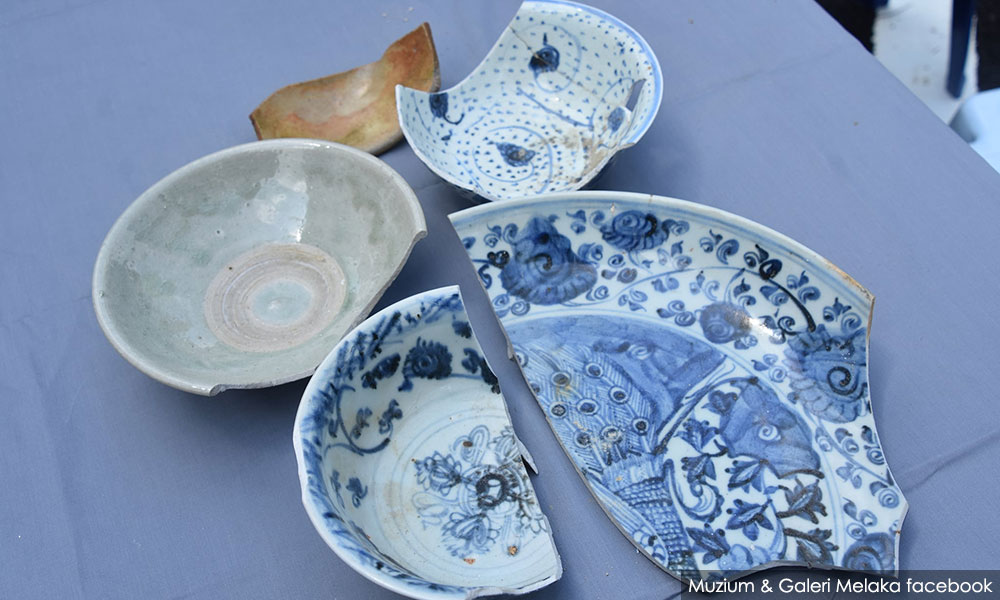
By the early 1500s, the peninsula - not Sumatra - had become the centre of Malay political power, trade and culture.
That shift, not some original point of origin, is the real reason the peninsula came to be called Tanah Melayu.
What this means for Malay identity
This history also tells us something about what being “Malay” actually meant. Anthony Milner has made the point that “Malayness” was never just about bloodline.
Over centuries, it developed into something closer to a civilisational identity - built around language, Islam, loyalty to Malay rulers, and adherence to Malay custom.
Communities from Java, Minangkabau, the Bugis lands, Banjar and Aceh were gradually absorbed into this wider Malay world through assimilation.
Families of Arab, Indian and Chinese descent who adopted Islam, spoke Malay and lived by Malay custom were, in time, accepted as Malay too.
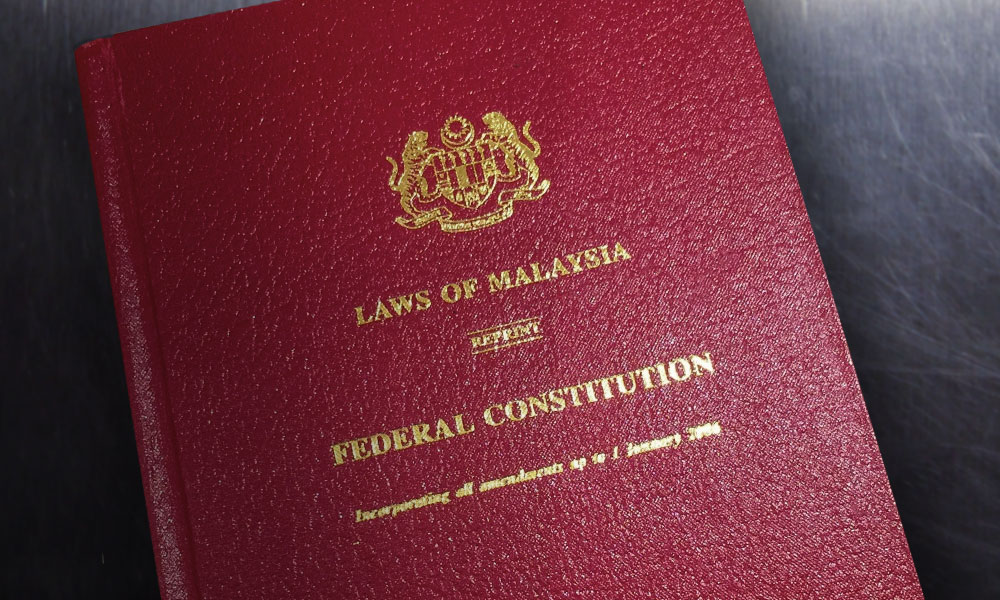
Malaysia’s Federal Constitution still reflects this. It defines a Malay by religion, language and custom - not by descent.
Why this matters?
Does any of this actually matter, beyond academic interest? I think it does – because our understanding of history should rest on evidence, not on inherited assumptions that nobody bothers to check.
Recognising southeast Sumatra as the Malays’ earliest home does not undermine the constitutional position of Malays today, nor does it diminish the peninsula’s central role in Malay history, or the achievements of the Malay sultanates and rulers.
Those belong to a different – later - chapter of the story, and there is no need to conflate the two.
If anything, the historical record makes the Malay story more impressive, not less. Starting from southeast Sumatra, the Malays built a civilisation whose reach went far beyond its original borders.
Their language became the lingua franca of maritime Southeast Asia. Their political traditions shaped one sultanate after another. Their literary, legal and cultural legacy is still felt across the region today.
History rarely stays still. It is not about fixed homelands or unchanging identities - it is about movement, adaptation and renewal. The Malays are a good example of exactly that.
Conclusion
So, was the Malay Peninsula the ancestral homeland of the Malays? The evidence does not really support that claim.
The earliest surviving written references to “Melayu”, together with the conclusions of leading historians, point instead to southeast Sumatra as the Malays’ original homeland.
It was only over the following centuries that the centre of Malay civilisation crossed the straits to the peninsula, where it eventually reached its fullest political, cultural and intellectual expression.
This is not just a technical correction. It is a reminder that peoples and civilisations rarely stay put in one place, frozen at one moment in time.
What makes the Malays remarkable is not a claim to some single, unbroken homeland - it is their ability to build, again and again, a civilisation that shaped the history of an entire region. - Mkini
RANJIT SINGH MALHI is an independent historian who has written 19 books on Malaysian, Asian, and world history. He is highly committed to writing an inclusive and truthful history of Malaysia based upon authoritative sources.
The views expressed here are those of the author/contributor and do not necessarily represent the views of MMKtT.

No comments:
Post a Comment
Note: Only a member of this blog may post a comment.